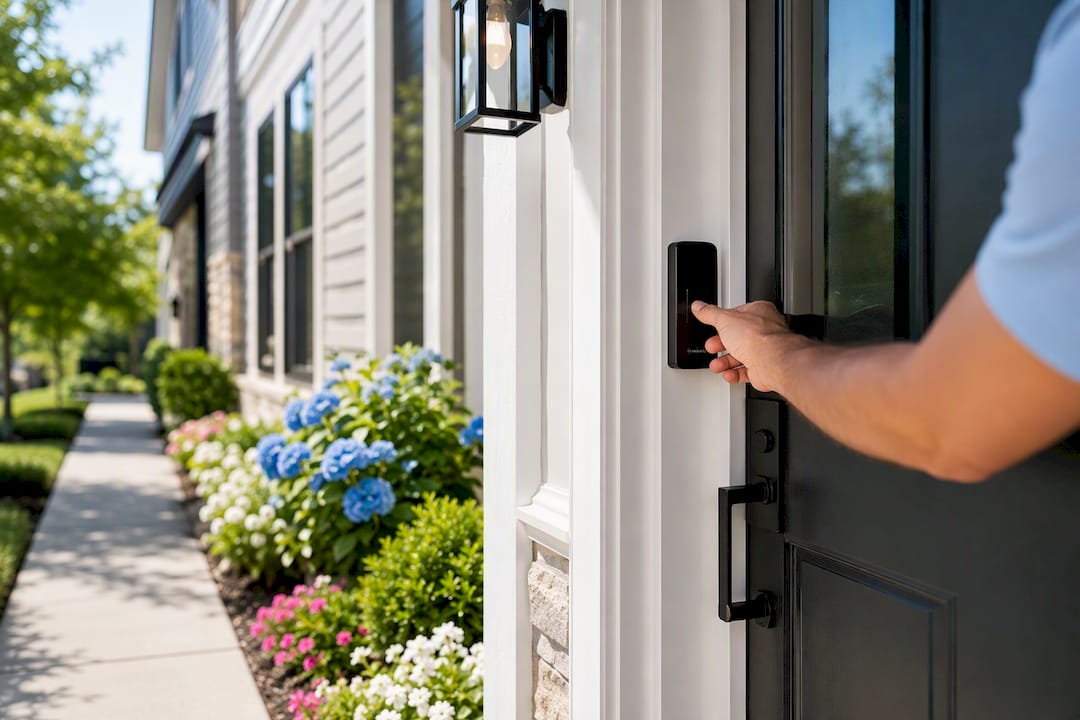
A self-showing rental, also called a self-guided tour, lets you tour a vacant unit on your own schedule using a time-limited access code instead of waiting for an agent to unlock the door. The main benefit is control: you pick the hour, skip the small talk, and walk through the space at your own pace. The main caveat is that this only works well when the property manager builds in real safeguards. Before you book one, confirm the listing offers:
- Identity verification before the code is issued
- A single-use, time-limited access code rather than a shared key
- Exterior cameras and an activity log tied to your visit
Done right, self-showing rentals solve a real scheduling problem. Done carelessly, they create security gaps that put both renters and property owners at risk.
Key Takeaways
Self-showing rentals give renters flexible, on-demand access to vacant units, but the safety of that access depends entirely on verification, single-use codes, and logging built by the property manager.
| Point | Details |
|---|---|
| Confirm verification first | Insist on ID checks and pre-qualification before accepting any access code. |
| Expect time-limited access | Codes should be single-use and expire shortly after your scheduled window closes. |
| Reserve self-showings for vacant units | Occupied units call for agent-led tours to protect current tenant privacy. |
| Document everything during the tour | Photos, timestamps, and notes on damage protect you if disputes arise later. |
| Choose managed programs for reliability | Milwaukeepm pairs tenant screening, portals, and follow-up to make self-showings safer for renters and owners alike. |
Table of Contents
- How Does the Self-Showing Rental Process Work?
- What Are the Pros and Cons of Self-Showing Apartments?
- What Safety Checks Should You Expect Before a Self-Showing?
- What to Bring and Check During a Self-Guided Tour
- When Should You Insist on an Agent-Led Tour Instead?
- How Professional Property Management Makes Self-Showings Safer
- What Legal and Privacy Rules Apply to Self-Showing Rentals?
- Who Carries Liability if Something Goes Wrong During a Self-Showing?
- What if the Access Code or Smart Lock Doesn't Work?
- An Editorial Take on Self-Showing Rentals
- A Property Manager That Builds Safeguards Into Every Showing
- Sources
How Does the Self-Showing Rental Process Work?
Most self-guided tours follow the same five-step sequence, whether you find the listing on a property management portal like HomeRent or a national rental site.
- You book through the listing. A "Tour Now" or "Self-Show" button on the listing page or portal lets you pick an available time slot, often outside standard business hours.
- You verify your identity. Expect to submit a phone number, a photo ID, and answer a few basic pre-qualification questions, such as move-in timeline or household size, according to a guide from Apartments.
- You receive access credentials. The system sends a single-use code tied to a smart lock, or directions to a lockbox, timed to your reserved window. RentLane notes that offline-capable smart locks are becoming standard because they still function during a Wi-Fi outage.
- You tour the unit. Codes typically activate a set number of minutes before your slot and expire shortly after, which keeps the property secure between visits.
- The manager follows up. Reputable operators reach out within 24 hours to answer questions and gauge interest, a practice RentLane's operational research flags as key to converting tours into applications.
What Are the Pros and Cons of Self-Showing Apartments?
The upside is mostly about time. You are no longer boxed into whatever window an agent has free between other showings, and evening or weekend slots capture renters who would otherwise put off touring altogether, an effect the Delet guide attributes directly to flexible scheduling.
What works in your favor:
- More available time slots, including evenings and weekends
- No coordination back and forth with an agent's calendar
- Faster path from interest to application, since you can tour the same day you see the listing
What to watch for:
- No one on-site to answer questions about the neighborhood or building quirks
- Verification gaps if a manager skips ID checks to move faster
- Missed "look-and-lease" incentives that some properties reserve for agent-led visits
For property managers, the trade-off runs the other direction. ShowMojo's leasing research found that self-showings paired with solid verification and single-use codes increase both touring capacity and leasing velocity, but that gain comes after an upfront investment in smart locks, software, and a screening workflow. A single mishandled showing or security incident can hurt a listing's conversion rate more than the cost of the hardware itself.
What Safety Checks Should You Expect Before a Self-Showing?
Treat the verification and access steps as a checklist, not a formality. If a listing skips any of these, that's a signal to ask questions before you show up.
- Identity verification happens first. You should submit ID and contact details before receiving any code, a baseline confirmed in Apartments.
- Access codes are single-use and time-limited. A code that never expires or gets reused for multiple prospects defeats the purpose of the system.
- Cameras should be exterior only. Cameras at entry points are a normal deterrent and evidence source, but interior cameras inside a unit you're touring are a legal and privacy red flag, according to RentLane's operational guidance.
- A welcome packet or text should walk you through the visit. Clear instructions and a direct contact number for questions during the tour indicate a well-run program.
Pro Tip: If a listing asks you to pay a fee just to receive the access code before you've even seen photos or floor plans of the interior, treat that as a warning sign rather than a normal cost of touring.
Red flags worth walking away from include requests for payment through untraceable methods, no verifiable phone number or company address, or instructions that contradict what the listing page says. A legitimate operator's process should feel consistent from booking to follow-up.
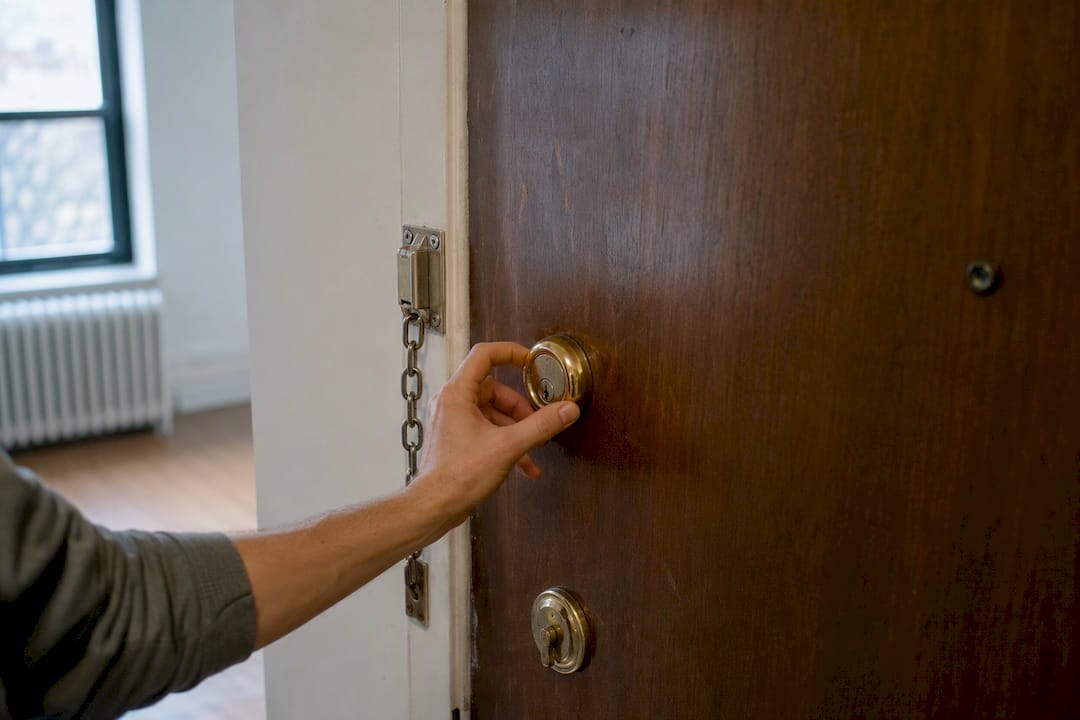
What to Bring and Check During a Self-Guided Tour
A self-showing works best when you treat it like a mini home inspection rather than a quick walkthrough.
- Pack light but useful gear. A tape measure, a flashlight for closets and under-sink areas, and a fully charged phone cover most of what you need.
- Test the basics. Check water pressure in the kitchen and bathroom, plug something into a few outlets, and check your cell signal in different rooms.
- Document as you go. Take time-stamped photos of any damage, note appliance brands and ages, and record anything that doesn't match the listing description.
- Respect the time window. Use the full slot to look carefully, but return the key or re-lock the lockbox promptly so the next prospect isn't delayed.
- Ask about next steps before you leave. Find out how to apply, what documents you'll need, and whether any move-in specials require signing in person.
When Should You Insist on an Agent-Led Tour Instead?
Self-showings make sense for vacant, straightforward units. They stop making sense in a handful of situations.
- Occupied units. Touring a home where a current tenant still lives raises privacy concerns for that tenant and safety concerns for you; industry best practice reserves self-showings strictly for vacant units, per Buildium's analysis of self-showing pros and cons.
- Complex or shared-amenity buildings. Parking rules, gate codes, and amenity access often need a person to explain them clearly.
- High-value or luxury units. These properties usually benefit from an agent who can walk you through finishes and features that a lockbox code can't explain.
- High-crime areas or weak-verification listings. If you can't confirm who else has access to the property, an accompanied tour is the safer choice.
How Professional Property Management Makes Self-Showings Safer
A managed self-showing program looks different from a landlord handing out a garage code. Full-service property managers build the safeguards discussed above directly into their leasing process, rather than treating them as optional extras.
- Tenant screening before a lease application mirrors the verification step every self-showing needs.
- Tenant portals create the same access logging and communication trail that makes a self-showing auditable, similar to the tenant portal tools Milwaukeepm provides to renters and owners alike.
- Maintenance coordination and fast follow-up turn a self-guided tour into a real application instead of a dead-end visit.
- A first-year tenant guarantee gives owners confidence that faster leasing through self-showings doesn't mean lower-quality tenants.
Owners managing several units, or facing frequent turnover, tend to benefit most from adding self-showings, since the time saved scales with portfolio size, an effect ShowMojo's portfolio research ties to hours saved per month. That same scale benefits renters directly: more available tour slots, faster answers, and a screening process that filters out bad-faith listings before you ever request a code.
What Legal and Privacy Rules Apply to Self-Showing Rentals?
Tenant privacy law is the biggest legal constraint on self-showing programs, and it's the reason occupied units almost always fall outside the practice. Most states require landlords to give current tenants advance notice, typically 24 to 48 hours, before anyone enters their home, including prospective renters on a tour. That's a separate legal requirement from anything related to vacant-unit self-showings, and it's why reputable managers keep occupied-unit tours agent-led and scheduled directly with the current tenant.
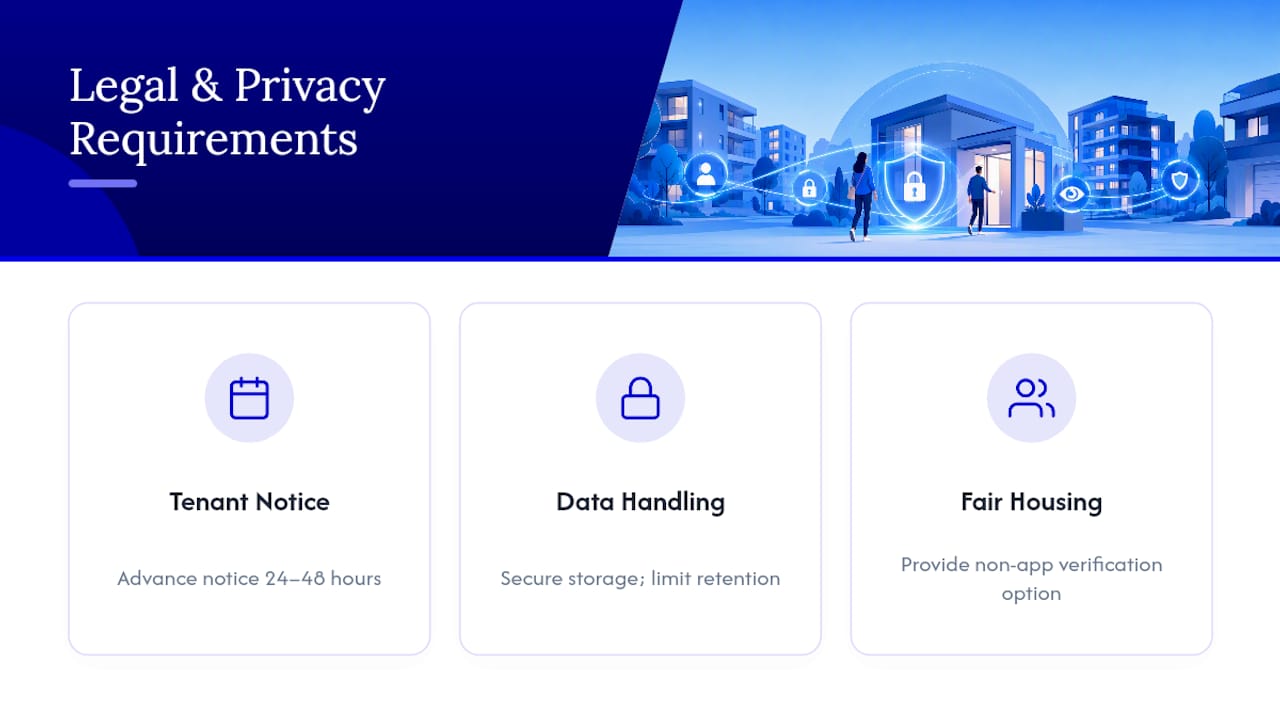
For vacant units, the legal exposure shifts toward data handling and access control. When a manager collects your ID and phone number to verify identity, that information needs to be stored securely and used only for the purpose you agreed to. Ask how long access logs and verification data are retained, and whether that information gets shared with anyone beyond the property management company itself.
Fair housing law also applies to self-showing systems the same way it applies to any other leasing practice. A verification or scheduling process can't functionally exclude applicants based on protected characteristics, even unintentionally, such as requiring a smartphone app that some applicants can't access. A well-run program offers an alternative path, like a phone-based verification option, for renters who can't use the primary app or portal.
Who Carries Liability if Something Goes Wrong During a Self-Showing?
Self-showings shift some risk onto property owners in ways that traditional agent-led tours don't, and insurance coverage hasn't always kept pace with the practice. If a prospect is injured touring a unit unaccompanied, whether from a loose stair rail or a poorly lit basement, the property owner typically carries liability exposure similar to any other visitor injury claim. The absence of an agent on-site doesn't reduce that exposure; if anything, it removes a witness who could otherwise document what happened.
Owners running self-showing programs should confirm their landlord liability policy explicitly covers unaccompanied prospect visits, since some standard policies were written before self-touring became common and may treat an unaccompanied visitor differently from an agent-led one. It's worth a direct conversation with an insurance agent rather than an assumption based on an older policy.
Theft or property damage during a self-showing raises a separate issue: without an agent present, proving what happened during the visit depends entirely on the access log and any exterior camera footage. That's part of why single-use codes and entry timestamps matter beyond convenience. They create the record an owner needs if a dispute arises over missing appliances or damage discovered after a tour. A property manager who builds logging into every self-showing gives owners a paper trail that a casual DIY lockbox setup usually can't match.
What if the Access Code or Smart Lock Doesn't Work?
Technology failures happen, and how a property manager handles them says a lot about the quality of the program. Before your scheduled tour, you should have a direct phone number or text line to call if a code doesn't work, a smart lock won't respond, or you can't locate a lockbox.
Offline-capable smart locks reduce one common failure point: a lock that depends entirely on live Wi-Fi or cellular service can fail during a network outage, while offline-capable models store the code locally and verify it without a live connection, a distinction RentLane's guide to self-showing setups highlights as a reason many managers upgrade away from basic combination lockboxes. If you arrive and the code doesn't work, don't force the lock or try codes repeatedly. Call the support number listed in your booking confirmation first.
A responsive manager should be able to remotely reissue a code, extend your time window to account for the delay, or dispatch someone to let you in if the technology genuinely fails. If a listing offers no real-time support option for troubleshooting, that absence is itself worth factoring into how much you trust the rest of the process.
An Editorial Take on Self-Showing Rentals
The convenience argument for self-showing rentals is obvious and mostly true. What gets less attention is that convenience and safety aren't opposing forces here. They come from the same source: a manager willing to build verification, single-use codes, and logging into the process instead of treating a lockbox as a shortcut around doing the work properly.
Conventional advice tends to frame self-showings as either a renter convenience or a landlord cost-saver, missing that the two only work together when the underlying system is built correctly. A code that never expires isn't more convenient. It's a liability wearing a convenience costume.
If you take one thing from this, prioritize the verification step over the technology. A smart lock is only as trustworthy as the identity check that precedes it. Ask who verified you, how, and whether that same standard applies to everyone else touring that unit. That question tells you more about the safety of a self-showing than whether the door uses a keypad or an app.
— Chaim
A Property Manager That Builds Safeguards Into Every Showing
For property owners weighing whether self-showings fit their portfolio, the real question isn't whether the technology works. It's whether someone is managing the verification, logging, and follow-up behind it. Milwaukeepm handles that entire chain as part of its full-service approach: thorough tenant screening before anyone gets a code, an owner and tenant portal that keeps access and communication logged in one place, and a first-year tenant guarantee that gives owners confidence a faster leasing process hasn't sacrificed tenant quality.
That combination matters most for owners with multiple units or frequent turnover, where the time saved by well-run self-showings adds up fast without adding risk. If you're evaluating whether your rental property could benefit from a managed showing process backed by full-service leasing and maintenance coordination, start by requesting a consultation through Milwaukeepm to see how a professionally managed showing program would work for your specific units.
Sources
- Everything you need to know about self-guided apartment tours
- Self-showings for rental properties: Pros and cons
- How Self-Showings Can Help You Lease More Properties