
No state requires renters insurance, but your landlord can require it in your lease. If your lease contains an insurance clause, check it now: note the coverage minimums, the proof required, and the deadline. Then gather a declarations page or binder before move-in, since most enforcement problems start with missing paperwork, not missing coverage.
TL;DR:
- Most landlords require renters insurance only if the lease explicitly states it, with enforcement depending on lease language and local laws.
- Typical coverage minimums are $100,000 in liability and $20,000 for personal property, costing around $13 to $22 monthly depending on location and deductible.
- Landlords usually verify coverage through declarations pages or insurance binders, not screenshots or text confirmations, and prefer interested-party notifications for compliance.
- Enforcement involves a notice process with a short cure window; keeping copies of submitted documents is crucial in case of disputes.
- Automated property management tools can streamline compliance tracking, ensuring proof of coverage is collected and monitored efficiently throughout the lease term.
Table of Contents
- Can a Landlord Legally Require Renters Insurance?
- What Coverage Amounts Do Landlords Typically Require?
- How Do Landlords Verify and Enforce Renters Insurance?
- What Does Renters Insurance Cost, and How Do You Get Compliant Fast?
- Lease Checklist: What to Confirm Before You Sign
- How Property Managers Keep Insurance Compliance on Track
- Why Fair Minimums Beat Rigid Rules
- How Milwaukeepm Handles Insurance Compliance for Owners
- Sources
- FAQ
Can a Landlord Legally Require Renters Insurance?
A landlord's authority to require renters insurance comes from the lease, not from any statute. No state mandates renters insurance by law, so the requirement only exists if it's written into your rental agreement. Once it's there, courts generally treat it like any other lease term and expect both sides to honor it.
HUD's guidance on lease terms confirms that enforcement depends heavily on the specific language in the lease and on your state's landlord-tenant statutes. That's why the details matter more than the general rule. A few things worth checking:
- Whether your state or municipality places any limit on what a landlord can demand in an insurance clause
- Whether the clause specifies a dollar amount or just says "adequate coverage," which invites disputes
- Whether the landlord can add the requirement mid-lease. Generally, landlords cannot introduce a new insurance mandate mid-lease without tenant agreement; new terms typically take effect at renewal.
If you signed a lease without an insurance clause, a landlord usually can't spring one on you until your next renewal.
What Coverage Amounts Do Landlords Typically Require?
Landlords tend to gravitate toward two round numbers: $100,000 in personal liability coverage and $20,000 in personal property coverage. Buildings with pools, gyms, or other shared amenities sometimes require higher liability minimums, since a single injury claim in a common area can get expensive fast.
By the numbers: Typical renters policies with these coverage levels run about $13 to $22 a month, depending on location and deductible.
The liability figure matters most to landlords, because it protects them if your dog bites a guest or your bathtub overflows into the unit below. Personal property coverage protects you, not the landlord. It's worth sizing that number yourself:
- Add up the replacement cost of your furniture, electronics, and clothing
- Include seasonal or higher-value items like bikes or musical instruments
- Round up, since replacement cost estimates almost always land lower than what things actually cost new
A renters policy typically bundles personal property, liability, and additional living expense coverage into one package, so you're rarely buying these separately.
How Do Landlords Verify and Enforce Renters Insurance?
A screenshot of an insurance app or a text confirmation from an agent won't satisfy most leases. Landlords typically want a declarations page or an insurance binder, both of which spell out your coverage limits, policy dates, and insurer in a format that's hard to fake and easy to file.
There's also an important distinction buried in most lease language: being listed as an "interested party" versus an "additional insured." An interested party just gets notified if your policy lapses or cancels; it costs you nothing extra. Additional insured status extends some of your coverage to the landlord and can raise your premium, and many insurers actually decline to add a landlord this way at all. Most landlords settle for interested-party status because it's simpler and cheaper for everyone.
When a tenant falls out of compliance, enforcement usually follows a predictable sequence:
- The landlord sends a written notice identifying the missing or lapsed coverage.
- The tenant gets a cure window, commonly 3 to 10 days, to submit updated proof.
- If the tenant doesn't cure the violation, the landlord can escalate to a cure-or-quit notice, with eviction timelines that vary by state.
Pro Tip: Keep a copy of every declarations page you submit, along with the date you submitted it. If a dispute ever reaches a cure notice, that paper trail is often what settles it.
What Does Renters Insurance Cost, and How Do You Get Compliant Fast?
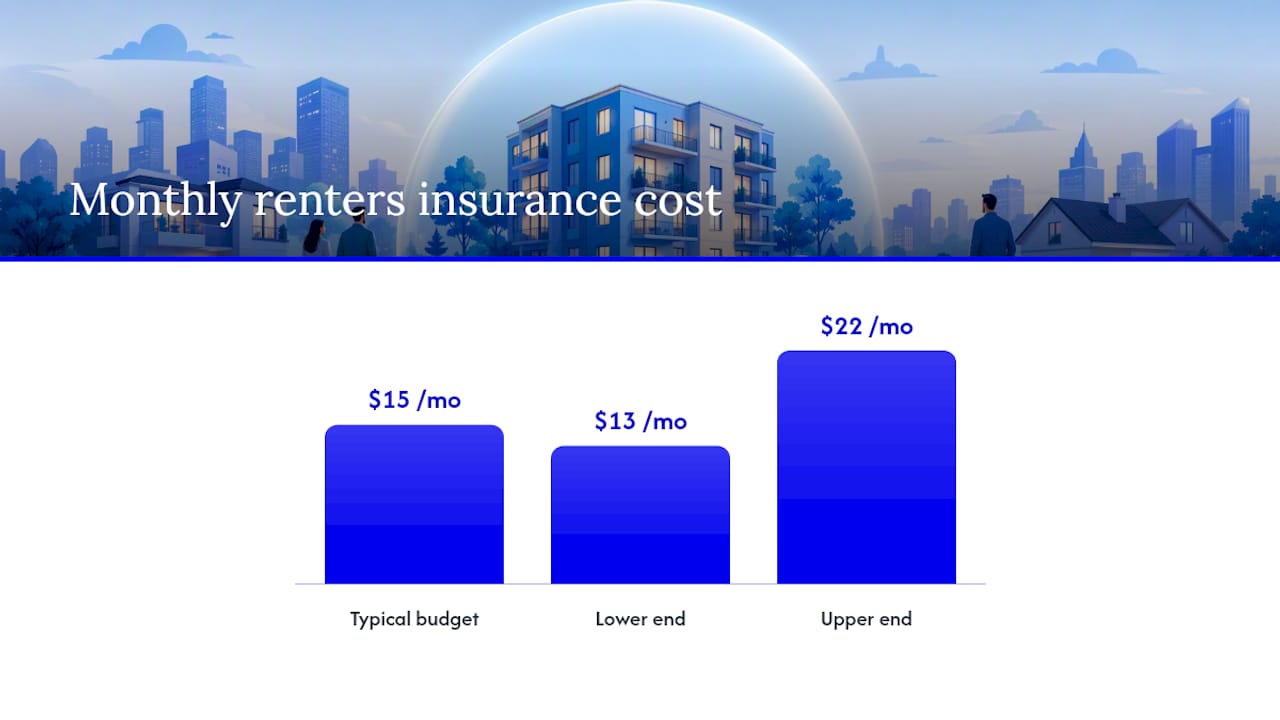
Budget around $15 a month for a basic policy, with most policies falling somewhere between $13 and $22 monthly depending on your coverage limits and where you live. That's a small price against the liability exposure of a single kitchen fire or a guest's slip-and-fall claim.
Before you shop, compare these four things across quotes:
- Personal liability limit (match or exceed your lease's minimum)
- Personal property limit (size it to what you actually own)
- Deductible (a higher deductible lowers your premium but raises your out-of-pocket risk)
- Additional living expense coverage, which pays for temporary housing if your unit becomes unlivable
Once you've bought a policy, request the declarations page immediately, ask your insurer to list your landlord as an interested party, and submit both documents before your move-in date.
Lease Checklist: What to Confirm Before You Sign
A few minutes reviewing the insurance clause before signing saves weeks of back-and-forth later. Confirm these points directly with your landlord or property manager:
- The exact dollar minimums for liability and, if specified, personal property
- Which proof documents are accepted and the submission deadline (usually before move-in or within a set number of days after)
- Whether the landlord wants interested-party notification or additional-insured status. If it's the latter, ask whether interested-party status would satisfy the requirement instead, since it's usually cheaper for you.
- Whether coverage must stay continuous throughout the lease term, and how you're expected to report a policy change or cancellation
Pro Tip: If a lease clause is vague, ask for it in writing before you sign, not after. "Adequate coverage" means something different to every landlord.
For related lease language around liability and coverage, it helps to understand how landlord insurance differs from tenant coverage, since the two policies protect different things entirely.
How Property Managers Keep Insurance Compliance on Track
Tracking renters insurance across dozens of units by spreadsheet invites lapses nobody notices until a claim happens. A tenant portal that collects declarations pages at move-in and flags renewals automatically removes most of that risk without extra staff time.
Operationally, this usually breaks down into a few repeatable habits:
- Require proof of coverage as part of the move-in packet, not as an afterthought after keys are handed over
- Use interested-party notifications so lapses trigger an alert rather than going unnoticed until renewal
- Log every reminder and cure notice sent, since that documentation matters if a lapse ever escalates toward eviction
Buildings with amenities that raise liability exposure, like shared package rooms, sometimes warrant a closer look at ownership liability risks when setting coverage minimums.
Why Fair Minimums Beat Rigid Rules
The landlords who get the fewest disputes over insurance clauses are the ones who set reasonable minimums and explain them clearly, not the ones who demand the highest number they can find in a template. A $100,000 liability minimum with a plain cure notice process does more to protect an owner than a $300,000 requirement nobody understands. Clear lease language paired with automated tracking through a portal closes most of the gap between tenant affordability and owner risk.
— Chaim
How Milwaukeepm Handles Insurance Compliance for Owners
Some property management companies give owners a system for renters insurance compliance instead of a manual chase. Where a DIY landlord tracks declarations pages in email threads and hopes nothing slips through, proof-of-insurance collection is built directly into lease administration and tenant onboarding.
That means tenant screening, lease signing, and insurance verification happen as one connected process, with renewal reminders handled automatically rather than left to a landlord's calendar. If a tenant's coverage lapses, the workflow flags it early, well before it becomes a legal notice. Owners get the added benefit of Milwaukeepm's 12-month tenant guarantee on new 12-month leases, so a placed tenant who doesn't work out gets re-rented at no additional charge. If you manage rental property in Milwaukee and want compliance handled instead of chased, review the service and pricing details and request a consultation.
Sources
- NAIC — Renting your home: Protect your belongings with renters insurance
- LeaseDecoded — Renters insurance clause guide
FAQ
Is Renters Insurance Always Required?
No. Renters insurance is never required by state or federal law, but it's often required as a lease condition set by an individual landlord. Whether you need it depends entirely on what your specific lease says, not on any statewide rule.
Is It Illegal to Rent Without Renters Insurance?
It's not illegal in the sense of breaking any law, but it can breach your lease if your landlord requires it. That's a contract violation, not a crime, and it's typically handled through a cure notice rather than legal penalties.
Can You Be Forced to Pay for Renters Insurance?
Your landlord can't force you to buy a specific policy, but a lease clause can make it a condition of tenancy. If you refuse and the lease requires it, you risk a cure notice and, eventually, eviction proceedings if the violation isn't fixed.
How Much Would a $300,000 Renters Insurance Policy Cost?
Coverage at that liability level usually falls within the same general $13 to $22 monthly range as lower limits, since liability increases tend to add only a modest amount to the premium. Your final price still depends on your location, deductible, and personal property limit.