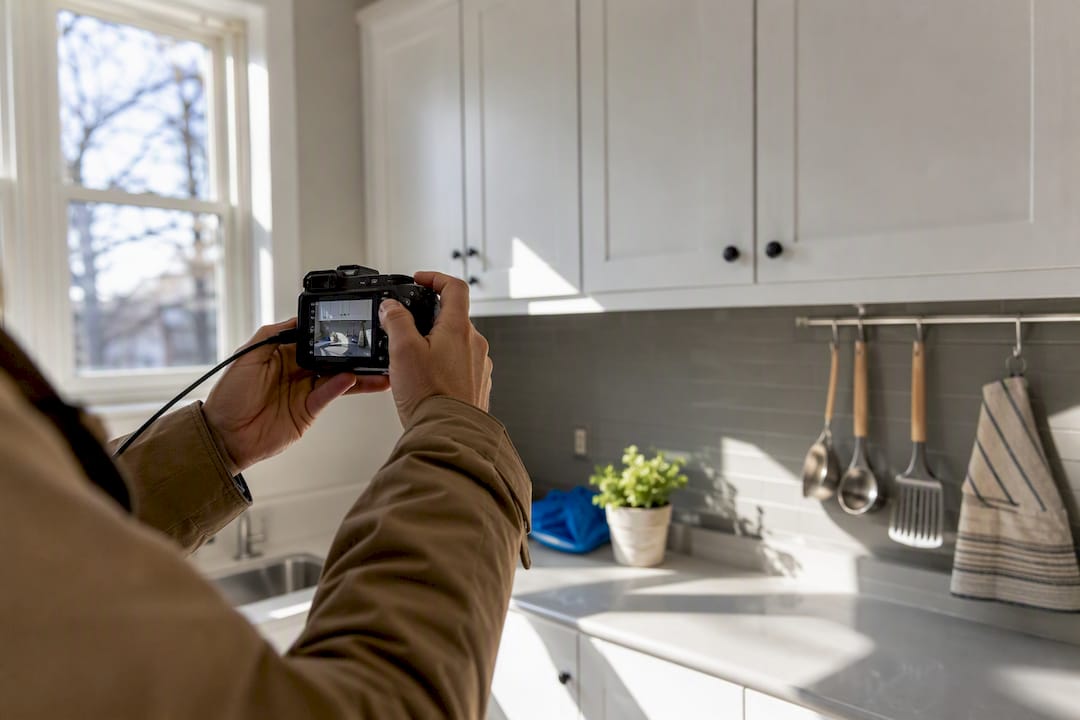
Yes, you can run a rental successfully from another state, but only with three systems in place: eyes on the property through regular inspections, hands on the ground through a vetted vendor bench, and books that keep rent and reserves automated. Skip any one of those and remote ownership turns into a slow-motion disaster. The one rule that never bends: you follow the landlord-tenant laws where the property sits, not where you sleep.
TL;DR:
- Having regular inspections, a vetted vendor bench, and automated bookkeeping are essential for successful remote property management.
- Owners managing more than eight doors should consider building in-house operations or hybrid models to optimize efficiency and control costs.
- Local landlord-tenant laws, rent control, and insurance requirements vary significantly and must be thoroughly researched before purchase.
- Reserve funds should cover at least six months of mortgage and operating costs due to the inability to address small issues immediately.
- Building your system within the first 90 days, including inspections, workflow testing, and communication routines, is crucial for long-term success.
Table of Contents
- Is Long-Distance Landlording Right for Your Portfolio?
- Core Systems: Eyes, Hands, and Books
- Operations Playbook: Screening, Leasing, and Maintenance From Afar
- U.S. Legal, Tax, and Insurance Checklist for Your Property's Location
- Budgeting: Reserves, Manager Fees, and the Real Math
- When to Hire a Property Manager (and Hybrid Models That Reduce Risk)
- Your 90-Day Setup Checklist for Remote Ownership
- What I've Learned Managing Rentals From a Distance
- Let Milwaukeepm Handle the Distance for You
- Where to Go for Official Guidance
- Sources
Is Long-Distance Landlording Right for Your Portfolio?
Remote ownership rewards investors scaling across markets for yield, appreciation, or lower purchase prices than their home city offers. It punishes owners with a single door in a heavily regulated market who can't absorb a surprise vacancy or a slow eviction process. The decision usually comes down to volume and temperament, not distance itself.
Ask yourself these questions before you close on an out-of-state property:
- Can you fund six months of reserves without touching your paycheck?
- Do you have (or can you build) a vendor bench before the first tenant moves in?
- Is the local market's regulatory complexity something you're prepared to research, or would a local property manager make more sense?
- Are you managing one door or ten? Below three units, the fixed cost of building your own systems rarely pays off compared to hiring help.
Core Systems: Eyes, Hands, and Books
Operator playbooks consistently point to the same three pillars for remote property management: inspections, a vendor bench, and automated bookkeeping. Skip one and the other two can't compensate.
Eyes means a move-in inspection with timestamped photos, an independent walkthrough every quarter or at minimum twice a year, and a documented move-out comparison. Hire a local inspector or a leasing agent for this if you can't fly in.
Hands means a bench with two providers per trade, not one. A single plumber who goes on vacation shouldn't stall a burst pipe repair for a week.

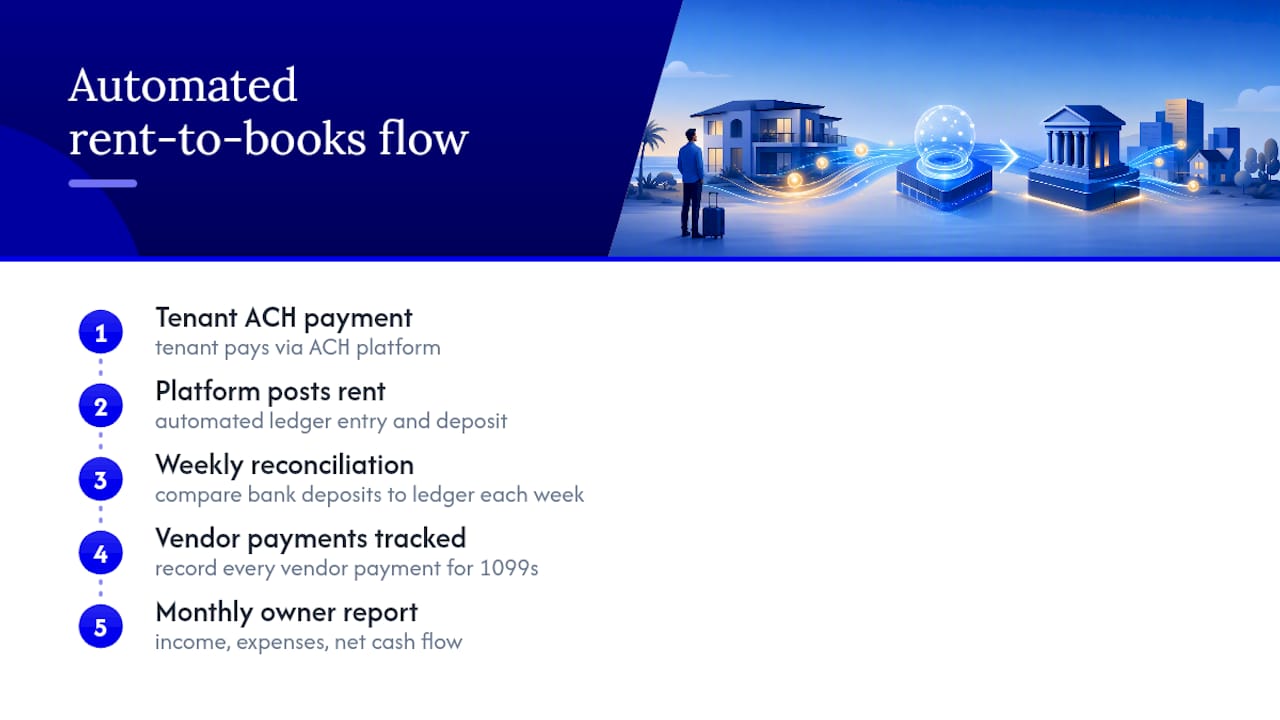
Books means rent collected through an ACH-based platform, not checks mailed to a P.O. box, with weekly reconciliation and a monthly owner-style report showing income, expenses, and net cash flow. Track every vendor payment for 1099 purposes at year end.
Pro Tip: Test every new vendor with one small paid job, like a lockbox swap or a leaky faucet, before you hand them a $2,000 make-ready. It's the cheapest due diligence you'll ever do, and it's a tactic Rents recommends for exactly this reason.
Operations Playbook: Screening, Leasing, and Maintenance From Afar
Repeatable processes matter more when you can't drive over to check on something. Build these once and reuse them for every unit.
- Screen with hard thresholds. Set a minimum credit score, run eviction and criminal background checks, verify income at two to three times rent, and call at least one prior landlord directly rather than trusting a reference letter.
- Write the lease for remote management. Specify authorized vendors who can enter without you present, require digital rent payments, define notice periods clearly, and spell out who holds keys and how access codes get issued.
- Route maintenance through a single workflow. Tenants submit a work order, a vendor gets authorized up to a preset dollar limit (anything above it needs your sign-off), the vendor submits a photo of finished work, and the invoice routes through your property management system.
- Solve access without being there. Smart lockboxes, one-time entry codes, or an hourly local host can handle a showing or a repair visit without you coordinating a key handoff from three states away.
Pro Tip: Cap vendor authorization at $250 to $300 without a call. It's high enough to fix most emergencies fast and low enough to stop a padded invoice from surprising you.
U.S. Legal, Tax, and Insurance Checklist for Your Property's Location
The property's state and city govern you, full stop. Owners who manage rentals from any state still have to comply with local landlord-tenant law and tax obligations where the unit sits.
Before you close on a property outside your home state, confirm:
- Eviction notice periods, security deposit caps, and entry notice laws for that specific state and city.
- Any local rent-control ordinances, since these vary block to block in some metros.
- Rental income reporting rules and deductible expenses under IRS Topic 503, including which property-visit travel expenses qualify as ordinary and necessary business trips.
- A landlord-specific insurance policy rather than a standard homeowners policy, since coverage differs meaningfully and most landlord policies exclude loss-of-rent unless you add it.
Fair housing rules apply the same way whether you're managing from next door or across the country. HUD's guidance on screening criteria is worth a careful read before you finalize your tenant qualification standards, especially if any part of your process is automated.
Budgeting: Reserves, Manager Fees, and the Real Math
Remote reserves need to run higher than a local landlord's, because you can't drive over to fix a small problem before it becomes an expensive one. Operator guides commonly recommend roughly six months of mortgage plus operating costs, plus a separate turnover fund to cover a paid make-ready crew since you won't be painting the walls yourself.
Run the numbers both ways before deciding how to operate:
- Property manager fees typically run a moderate percentage of monthly rent, often with a lease-up fee equal to about one month's rent.
- A self-managed vendor stack replaces that percentage fee with hourly and flat-fee vendor invoices, plus your own time spent coordinating.
- On a typical rental unit, a manager's fee often runs a low double-digit percentage of monthly rent. If your time coordinating vendors is worth more than that per month to you, the manager usually wins the math.
When to Hire a Property Manager (and Hybrid Models That Reduce Risk)
Door count is the simplest signal for which path fits.
- Eight doors or fewer: hiring a property manager is often the easiest path, since the fixed cost of building your own systems rarely pencils out yet.
- Eight to twenty-five doors: a hybrid model tends to work best, mixing a leasing-only agent for tenant placement with your own vendor bench for maintenance.
- More than twenty-five doors: building in-house operations, including a dedicated maintenance coordinator, usually beats paying percentage fees across that much revenue.
Hybrid tools worth using regardless of door count include leasing-only agents, a local maintenance coordinator who handles dispatch without full management authority, second-opinion vendors for expensive repair quotes, and an independent inspector who reports to you, not to whoever did the repair. If you're facing a complex local market, rent control, or you simply don't have the bandwidth some months, that's the signal to hire help now rather than after a costly mistake. Reading through effective management practices used locally can help you benchmark whether your current approach is holding up.
Your 90-Day Setup Checklist for Remote Ownership
Treat the first 90 days as a build phase, not a soft launch.
- Days 0 to 30: Hire two-deep vendors in every core trade, set up your property management system, finalize the lease with remote-friendly clauses, and confirm landlord insurance is active before the first tenant moves in.
- Days 30 to 60: Run your first independent inspection, test the maintenance dispatch and photo-proof workflow on a real work order, and establish a weekly bookkeeping reconciliation habit.
- Days 60 to 90: Simulate a turnover from a distance, validate that your tenant communication process actually gets answered within a reasonable window, and schedule recurring monthly owner reports going forward.
Turnover standards matter more than most new remote landlords expect. Reviewing cleaning compliance best practices for turnovers is a smart way to set the bar for your make-ready crew before the first vacancy hits.
What I've Learned Managing Rentals From a Distance
Three things separate landlords who thrive remotely from those who burn out: discipline in following your own inspection schedule even when nothing seems wrong, verification of every vendor invoice against the photo-of-finish rule, and reserves sized for reality instead of optimism. Track three numbers monthly: vacancy rate, average response time to work orders, and net cash flow after reserves. If any of those three drifts the wrong direction for two months running, that's your signal to change something before it compounds.
— Chaim
Let Milwaukeepm Handle the Distance for You
Building your own vendor bench, inspection cadence, and bookkeeping system takes real time, and not every owner wants that job. Milwaukeepm is the alternative to assembling your own remote operation piece by piece: one team handling tenant screening, maintenance coordination with preferred vendors, and monthly reporting, backed by a tenant guarantee for the first year that most self-managed owners simply can't offer themselves.
Owners get a dedicated owner portal for real-time reporting and tenants get their own portal for payments and maintenance requests, which keeps communication moving without you fielding every call from three states away. If you want to see how full-service management compares to running the vendor stack yourself, start by reviewing Milwaukeepm's property management services and request a quote for your specific property.
Where to Go for Official Guidance
For tax treatment of rental income, check IRS Topic 503 directly. For screening and fair housing rules, HUD's fair housing resources cover what landlords can and can't use in tenant decisions. Both sit above any blog post, including this one, as the final word.
Sources
- Remote Property Management Guide (2026 Landlords) — Pickspace
- Managing Rental Properties Out-Of-State | Quicken Loans
- IRS — Topic No. 503: Deductible Taxes
- Rents