
If a tenant pays rent to live in your property, a standard homeowners policy is the wrong tool for the job. The correct coverage is a landlord insurance policy (also called a dwelling policy or rental dwelling policy). If you live in the home yourself, homeowners insurance is what you need. That single occupancy distinction is the most consequential decision a U.S. property owner makes on insurance, because a claim can be denied outright when the policy on file doesn't match how the property is actually used.
Here's what that means in practice:
- Who it's for: Homeowners insurance covers owner-occupied residences. Landlord insurance covers tenant-occupied rental properties.
- Lost income vs. lost housing: Homeowners policies pay additional living expenses (ALE) if you're displaced. Landlord policies pay loss of rental income if a covered event makes the unit unrentable.
- Personal property: Homeowners policies cover your furniture, electronics, and belongings. Landlord policies cover only landlord-owned items (appliances, fixtures). Tenant belongings are the tenant's responsibility, covered by renters insurance.
- Liability scope: Both include liability, but landlord liability is underwritten for tenant-occupancy risks — slip-and-fall claims from tenants and their guests, habitability disputes, and higher foot-traffic exposure.
- Vacancy rules: Homeowners policies typically tolerate brief absences. Landlord policies often void coverage after 30–60 days of vacancy unless a vacancy endorsement is in place.
The Insurance Information Institute recommends notifying your insurer before renting out your home, because most standard homeowners forms exclude rental use. Carriers like Allstate confirm that rental-property insurance focuses on structure and landlord liability while tenants must rely on renters insurance for their possessions.
Key Takeaways
Landlord insurance and homeowners insurance are not interchangeable — using the wrong policy on a tenant-occupied property is the single most common and costly coverage mistake U.S. property owners make.
| Point | Details |
|---|---|
| Occupancy determines policy type | Owner-occupied homes need homeowners insurance; tenant-occupied rentals need a landlord or DP policy. |
| Homeowners policies can be voided | Insurers can deny claims when a property is tenant-occupied but insured under a homeowners policy. |
| Loss of rent is not automatic | Confirm fair rental value or loss-of-rental-income coverage is explicitly included in any landlord policy quote. |
| Vacancy rules create gaps | Most policies limit or void coverage after 30–60 days of vacancy; a vacancy endorsement closes that gap. |
| Milwaukeepm reduces coverage risk | Professional management keeps vacancies short, leases documented, and tenant renters insurance requirements enforced. |
Table of Contents
- Landlord vs homeowners insurance: a side-by-side comparison
- Which policy do you actually need? Scenario rules for common situations
- What landlord insurance normally covers — and what it usually excludes
- Why homeowners insurance often falls short for rental properties
- How premiums compare and what drives the cost difference
- How to buy the right coverage — a step-by-step checklist
- Dwelling (DP) policies as an alternative — when they make sense
- A property manager's perspective on insurance decisions
- How Milwaukeepm helps landlords stay properly covered
- Sources
Landlord vs homeowners insurance: a side-by-side comparison
The table below compares the core coverage dimensions that drive the decision for most U.S. property owners.
| Coverage Dimension | Homeowners Insurance (HO-3/HO-5) | Landlord Insurance (DP-3 / Rental Dwelling) |
|---|---|---|
| Who it's for | Owner-occupants | Landlords with tenant-occupied rentals |
| Dwelling/building | Yes — open perils (HO-3) | Yes — open perils on DP-3; named perils on DP-1/DP-2 |
| Personal property | Owner's belongings, broad coverage | Landlord-owned items only (appliances, fixtures) |
| Liability | Personal liability (owner + household) | Landlord premises liability (tenant/guest injuries) |
| Loss of use vs. loss of rent | Additional Living Expenses (ALE) for owner displacement | Fair Rental Value / Loss of Rental Income |
| Vacancy rules | Brief absences tolerated; extended vacancy may limit coverage | Coverage often voids after 30–60 days; vacancy rider available |
| Short-term rental (STR) | Usually excluded; STR endorsement may be available | Separate STR endorsement or policy typically required |
| Typical endorsements | Jewelry, home office, identity theft, water backup | Loss of rent, vandalism, vacancy permit, STR endorsement |
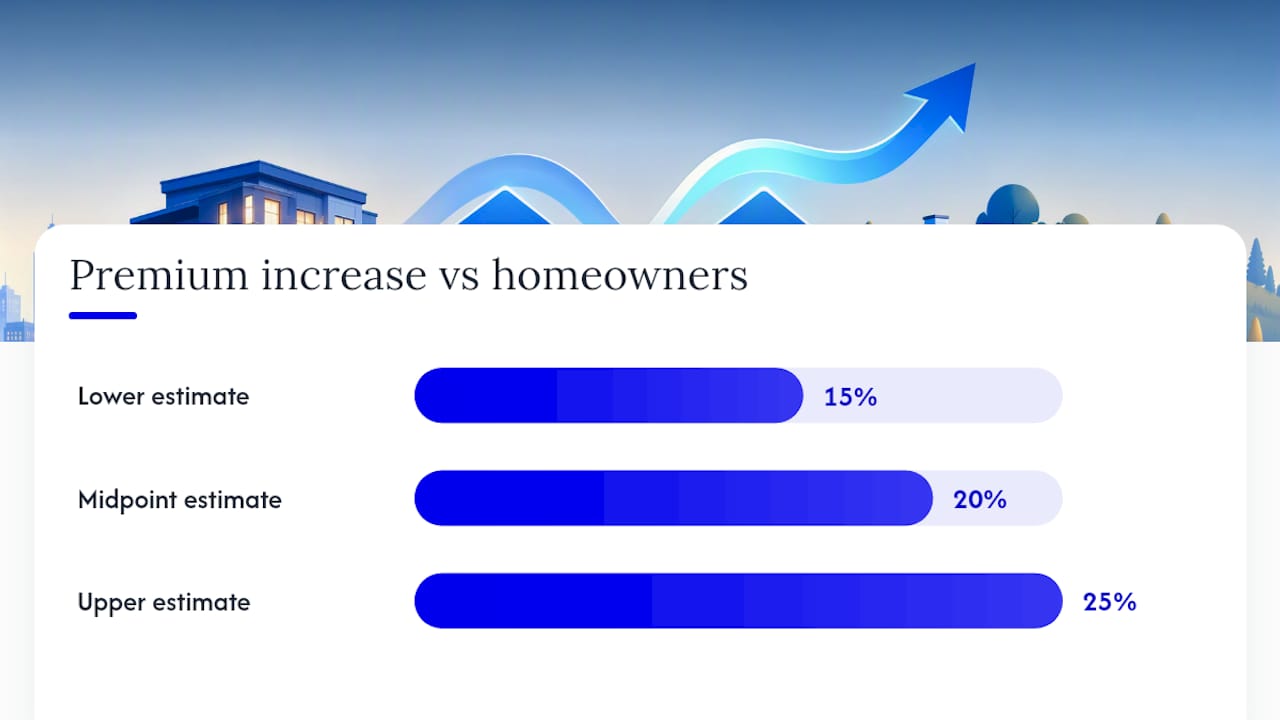
| Cost vs. same structure | Baseline | Typically 15–25% higher than a comparable homeowners policy |
Three rows in that table carry the most weight when you're making a coverage decision:
- Loss of rent vs. ALE: If a fire makes your rental uninhabitable, ALE pays for your temporary housing. It does nothing for the rental income you've lost. Only a landlord policy's loss-of-rent provision covers that gap.
- Landlord liability: Standard personal liability on a homeowners policy is underwritten for owner-occupancy risk. Tenant-occupancy creates different exposures — habitability claims, higher visitor traffic, and premises liability for people you've never met. A landlord policy prices and covers those exposures correctly.
- Tenant belongings: Neither policy covers what tenants own. A landlord policy makes this explicit. Requiring tenants to carry renters insurance is the standard way to close that gap and reduce third-party claim friction.
Which policy do you actually need? Scenario rules for common situations
Most coverage mistakes happen at the moment a property's use changes. These scenario rules map the most common situations to the right policy.
- You live in the home full time. A standard homeowners policy (HO-3 or HO-5) is correct. No changes needed unless you start renting.
- You've moved out and a tenant pays full rent. Switch to a landlord policy (DP-3 or equivalent rental dwelling policy) before the tenant moves in. A homeowners policy on a fully rented property is a coverage mismatch that can void a claim.
- You rent out one room while still living there. Your homeowners policy may still apply, but notify your insurer immediately. Many carriers offer a home-sharing endorsement or limited rental endorsement for this scenario. Don't assume the base policy covers rental income or tenant-related liability.
- You list the property on Airbnb or VRBO (short-term rental). Standard homeowners and standard landlord policies both typically exclude STR activity. You need either a short-term rental endorsement (some carriers offer these) or a dedicated STR policy. The Insurance Information Institute specifically flags this: contact your insurer before listing.
- Seasonal or vacation rental. Seasonal rentals require special underwriting. Insurers treat occasional rentals differently from year-round owner-occupied homes, and a vacation home policy or endorsement is usually required.
- Property is vacant between tenants. This is the most overlooked gap. Vacancy typically triggers a coverage limitation after 30–60 days on both homeowners and landlord policies. A vacancy permit or endorsement keeps coverage intact during turnover.
Pro Tip: If you're in a transitional period — you've moved out but haven't signed a lease yet — call your insurer the day you vacate. Most policies treat the change in occupancy as a material change in risk. Waiting until a tenant is in place can leave a gap in coverage that's hard to close retroactively.
What landlord insurance normally covers — and what it usually excludes
A landlord policy is built around four core coverage elements. Understanding each one helps you spot gaps before a claim happens.
What's typically included:
- Dwelling/building coverage: Pays to repair or rebuild the structure after a covered loss (fire, wind, hail, vandalism). DP-3 policies cover the dwelling on an open-perils basis, meaning all causes of loss are covered unless specifically excluded.
- Other structures: Detached garages, fences, and outbuildings on the property.
- Landlord-owned personal property: Appliances, model-unit furnishings, and maintenance equipment you own and keep on-site.
- Landlord premises liability: Covers legal costs and damages if a tenant or visitor is injured on the property and you're found liable.
- Fair rental value / loss of rental income: Pays the rent you would have collected if a covered loss makes the unit temporarily unrentable.
Common exclusions landlords must watch for:
- Tenant belongings: Not covered. Tenants need their own renters insurance policy.
- Vacancy limitations: Coverage often voids or is severely limited after 30–60 days of vacancy. Check your declarations page for the exact trigger period.
- Wear and tear / maintenance neglect: No policy covers gradual deterioration. A roof that fails from age isn't a covered loss.
- Intentional damage: Tenant-caused intentional damage is typically excluded, though some policies offer a vandalism endorsement.
- Flood and earthquake: Standard landlord policies exclude both. Separate flood insurance (through the National Flood Insurance Program or a private carrier) and earthquake coverage require separate policies or endorsements.
DP policy forms explained
Dwelling policies come in three forms, each with a different breadth of coverage:
- DP-1 (Basic form): Named-perils only — covers a short list of causes (fire, lightning, windstorm). The most limited and least expensive option. Common for older or lower-value investment properties.
- DP-2 (Broad form): Covers a wider list of named perils than DP-1, including falling objects and weight of ice/snow. A middle-ground option.
- DP-3 (Special form): Open-perils coverage for the dwelling structure (all causes covered unless excluded) while personal property remains on a named-perils basis. This is the most common form for active rental properties and the closest equivalent to an HO-3 for a non-owner-occupied home.
Pro Tip: When reviewing a DP-3 quote, ask the agent to confirm whether loss of rental income is included or must be added as an endorsement. Some carriers bundle it; others treat it as optional. The same applies to vandalism coverage, which DP-1 policies often exclude entirely.
Why homeowners insurance often falls short for rental properties
Homeowners policies (HO-3 and HO-5) are built around a specific assumption: the policyholder lives in the home, maintains it, and is present to notice problems. That assumption shapes every coverage element in the policy.
What homeowners policies include:
- Broad personal property coverage for the owner's belongings
- Personal liability for the owner and household members
- Additional Living Expenses (ALE) if the owner is displaced by a covered loss
- Dwelling coverage on an open-perils basis (HO-3) or open-perils for both dwelling and contents (HO-5)
The problem is that none of these translate cleanly to a rental situation. ALE pays for your hotel and meals if your home burns down. It doesn't replace the rent you're owed when a tenant can't occupy the unit. Personal property coverage protects your sofa and laptop, not the tenant's. And personal liability is underwritten for owner-occupancy risk, not the higher-frequency, higher-exposure liability environment of a tenant-occupied property.
The most serious issue is underwriting. HO-3 and HO-5 forms are underwritten assuming owner occupancy. When a property is tenant-occupied, the insurer's risk model no longer applies. Higher foot traffic, different maintenance patterns, and different liability exposures all change the risk profile. Insurers treat this as a material change in risk, and a claim filed on a homeowners policy for a tenant-occupied property can be denied on that basis alone.
The premium gap between a homeowners policy and a landlord policy is real but modest. The financial exposure from a denied claim is not.
How premiums compare and what drives the cost difference
Landlord policies typically cost more than homeowners policies for the same structure. Industry analysis commonly cites a range of approximately 15–25% higher premiums on average, though the actual difference varies significantly by state, property type, and coverage selections.
Coverage note: That 15–25% premium gap is a general industry estimate. Your actual quote depends on the specific property, location, claims history, and endorsements selected. Always compare policies at equivalent coverage limits and deductibles.
Primary premium drivers for both policy types:
- Occupancy and use: Tenant-occupied properties carry higher liability and maintenance risk, which is the core reason landlord policies cost more.
- Claims history: Prior claims on the property or by the owner raise premiums on both policy types.
- Property age and construction: Older properties, knob-and-tube wiring, or non-standard construction materials increase premiums.
- Location: Crime rates, proximity to fire stations, coastal or flood-zone exposure, and state-level regulatory environments all affect pricing.
- Dwelling rebuild cost: Policies are priced on replacement cost, not market value. A property in a high-labor-cost market costs more to rebuild and more to insure.
- Endorsements and coverage limits: Adding loss-of-rent coverage, vacancy permits, or STR endorsements increases the premium but closes gaps that would otherwise result in out-of-pocket losses.
When comparing quotes, don't compare premiums alone. Confirm that both quotes use the same dwelling replacement cost, the same liability limit, the same deductible, and the same loss-of-rent calculation method. A lower premium with a shorter loss-of-rent period or a higher deductible isn't a better deal.
How to buy the right coverage — a step-by-step checklist
Shopping for landlord or homeowners insurance is straightforward when you know what to confirm before and during the agent conversation.
Step-by-step checklist:
- Confirm occupancy and use. Is the property owner-occupied, tenant-occupied, or transitional? Your answer determines the policy type before you request a single quote.
- Gather your documents. Agents need: current lease agreements, a rent roll showing monthly income, prior policy declarations pages, and documentation of any recent improvements or renovations.
- Check your mortgage lender's requirements. Most lenders require hazard insurance at minimum. Some specify coverage types, minimum liability limits, or require the lender be listed as an additional insured. Review your loan documents before selecting a policy.
- Request explicit loss-of-rent wording. Ask for the policy language on fair rental value or loss of rental income — specifically how many months it covers and whether it requires a waiting period.
- Verify vacancy limits. Ask exactly how many days of vacancy trigger a coverage limitation or exclusion. Get the answer in writing.
- Confirm STR and endorsement status. If you rent short-term or seasonally, confirm whether the policy covers that use or whether an endorsement is required.
- Get all endorsements in writing. Verbal assurances from an agent are not coverage. Endorsements must appear on the declarations page.
Questions to ask your agent or broker:
- "Will my current homeowners policy cover a paying tenant?"
- "How is loss of rent calculated, and how many months does it cover?"
- "What vacancy period triggers a coverage limitation or exclusion?"
- "Does this policy cover short-term or Airbnb-style rentals?"
- "What endorsements do you recommend for a property of this type and age?"
- "Does the policy cover landlord-owned appliances, and at what value?"
- "How does the claims process work if a tenant causes damage?"
For additional coverage options and endorsements specific to rental properties, Stapp Insurance's services covers landlord and homeowners products and can walk through policy forms in detail.
Dwelling (DP) policies as an alternative — when they make sense
A dwelling policy isn't a landlord policy by another name. It's a distinct policy form designed for non-owner-occupied properties, and it's worth understanding when it's the right fit versus a standard landlord policy.
DP-1, DP-2, and DP-3 forms differ primarily in how broadly they define covered causes of loss. DP-3 is the most comprehensive: open-perils coverage for the dwelling structure, with personal property on a named-perils basis. That structure-versus-contents distinction is a meaningful tradeoff. If a DP-3 policy covers the building on open perils but your landlord-owned appliances are only covered for named perils, a loss from an unlisted cause leaves the appliances unprotected.
Key tradeoffs with DP policies:
- Liability is not automatic. Many DP policies exclude liability coverage unless it's added as an endorsement. This is a critical gap for landlords — always confirm liability is included.
- Theft coverage is often restricted. DP-1 policies typically exclude theft. DP-2 and DP-3 may include it, but confirm the terms.
- Personal property valuation differs. DP policies may value landlord-owned personal property differently than an HO policy values owner belongings. Actual cash value (ACV) versus replacement cost value (RCV) is a key distinction to verify.
When a DP policy is the practical choice:
- Investment properties that don't qualify for standard HO underwriting (due to age, condition, or occupancy history)
- Older properties where the owner wants structure-only coverage without paying for personal property coverage
- Seasonal rentals where the owner wants a stripped-down policy with specific endorsements added for rental periods
Always read the declarations page and exclusions section of any DP policy before binding coverage. State insurance department guidance, such as the NC DOI dwelling policy page, explains form differences in plain language and is a useful reference regardless of which state your property is in.
A property manager's perspective on insurance decisions
The insurance conversation looks different from the property management side of the table. Where a landlord sees a policy document, a property manager sees a set of operational levers that directly affect whether a claim gets paid and how quickly.
The most effective risk-reduction tool a manager uses isn't an endorsement. It's tenant screening. A well-screened tenant reduces the probability of intentional damage, habitability disputes, and liability claims. Combine that with regular property inspections and documented maintenance coordination, and you've reduced the insurer's risk profile in ways that no endorsement can replicate. Managers who understand this use it as a selling point with landlords who are weighing the cost of professional management against the cost of a higher-risk policy.
Loss-of-rent coverage is where documentation discipline pays off. When a covered loss occurs, the insurer needs evidence: a current lease showing the rent amount, written notice to the tenant, repair invoices, and a timeline of when the unit became uninhabitable and when it was restored. Property managers who maintain organized rent rolls and documented communication histories process these claims faster and with fewer disputes. A landlord handling this alone, with informal lease agreements and no paper trail, often waits longer and recovers less.
Vacancy is the other pressure point. Most landlord policies limit or void coverage after 30–60 days of vacancy. A manager focused on effective management practices keeps turnovers short through proactive marketing, pre-screened applicant pipelines, and fast maintenance coordination. That operational discipline isn't just good for revenue — it keeps the property inside the policy's coverage window. When a vacancy does extend, a good manager flags it immediately so the landlord can add a vacancy rider before coverage lapses.
Lease language is the third lever. Requiring tenants to carry renters insurance and listing the landlord as an additional interest on that policy is standard practice among experienced managers. It clarifies responsibility for tenant belongings, reduces friction on third-party claims, and signals to the insurer that the property is professionally managed. Understanding what to look for in a property management partner includes exactly this kind of insurance-aware operational approach.
How Milwaukeepm helps landlords stay properly covered
Keeping the right insurance in place isn't just about picking a policy. It's about maintaining the operational conditions that keep that policy valid — short vacancies, documented leases, screened tenants, and organized records.
Milwaukeepm provides full-service property management for residential and commercial property owners in Milwaukee, and the day-to-day work directly supports insurance compliance. Lease agreements include clauses requiring tenants to carry renters insurance. Owner and tenant portals keep communication documented and accessible. Maintenance is coordinated through preferred vendors with written records — exactly the paper trail insurers need when a claim is filed. The tenant guarantee for the first year reduces the risk of early vacancy, keeping properties inside the coverage window that most landlord policies require.
When a property transitions between tenants, Milwaukeepm manages the turnover timeline to minimize the vacancy period that triggers coverage limitations. For landlords who've been running a rental on a homeowners policy without realizing the risk, the first conversation with a Milwaukeepm manager often surfaces the coverage gap before it becomes a denied claim.
Get started with Milwaukee property management or review the full property management services to see how operational management and insurance readiness work together.
Sources
These sources provide authoritative guidance on policy forms, coverage rules, and state-specific requirements.
- Homeowners Insurance vs. Landlord Insurance | MoneyGeek
- Dwelling Policies | NC DOI
- Coverage for renting out your home | Insurance Information Institute
- Homeowners, landlords and rental property insurance | Allstate
This article is general information, not a substitute for advice from a qualified financial advisor. Consult a qualified financial professional about your own circumstances before acting on anything here.