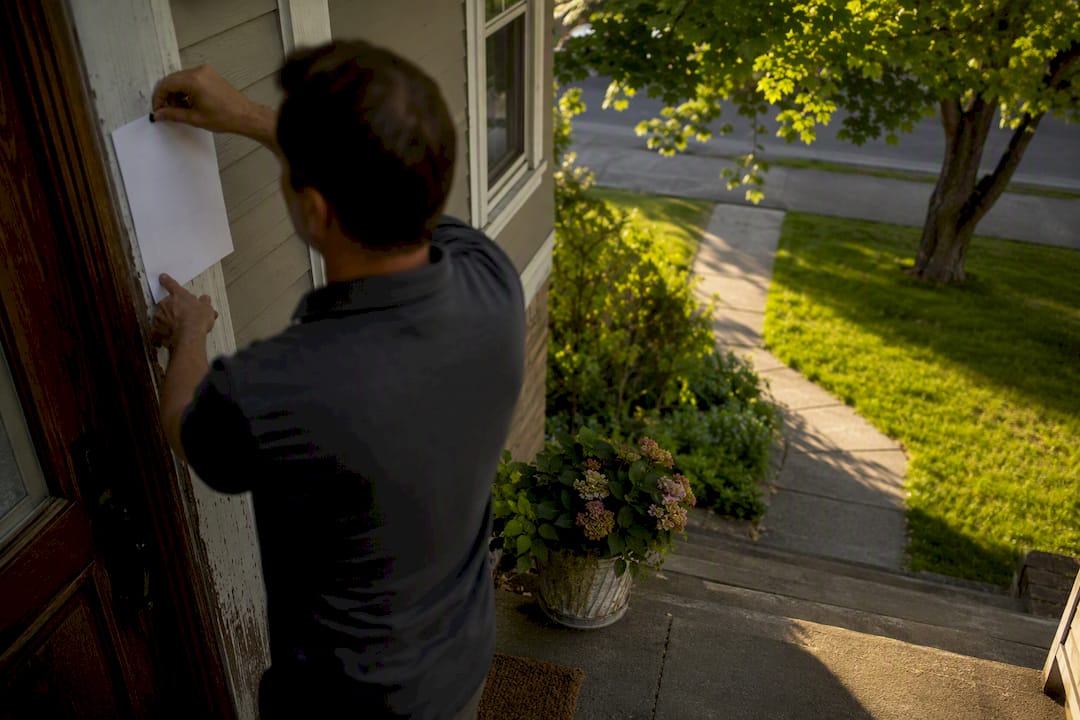
Every residential eviction in the United States follows the same seven-step backbone: give proper written notice, file the eviction (unlawful detainer) case, serve the tenant with court papers, wait for a response or default, attend a hearing or receive a default judgment, obtain a judgment and writ of possession, and finally enforce that writ through the sheriff.
- Step 1: Serve proper written notice
- Step 2: File the eviction/unlawful detainer case
- Step 3: Serve the tenant with court papers
- Step 4: Tenant responds, or the court enters a default
- Step 5: Hearing or default judgment
- Step 6: Judgment and writ of possession
- Step 7: Sheriff enforcement and move-out
Notice periods alone can range from a few days up to several weeks or months depending on the reason for eviction and local law, and most court timeline charts don't even count that notice window into their totals, according to California Courts Self-Help.
Key Takeaways
The eviction process always follows the same seven-step legal sequence, but notice length, filing fees, and enforcement timing shift dramatically from state to state.
| Point | Details |
|---|---|
| Seven fixed steps | Notice, filing, service, response, hearing, judgment, and writ enforcement apply in every state. |
| Notice type matters most | Choosing the wrong notice (pay/quit, cure/quit, unconditional quit) is a leading cause of dismissal. |
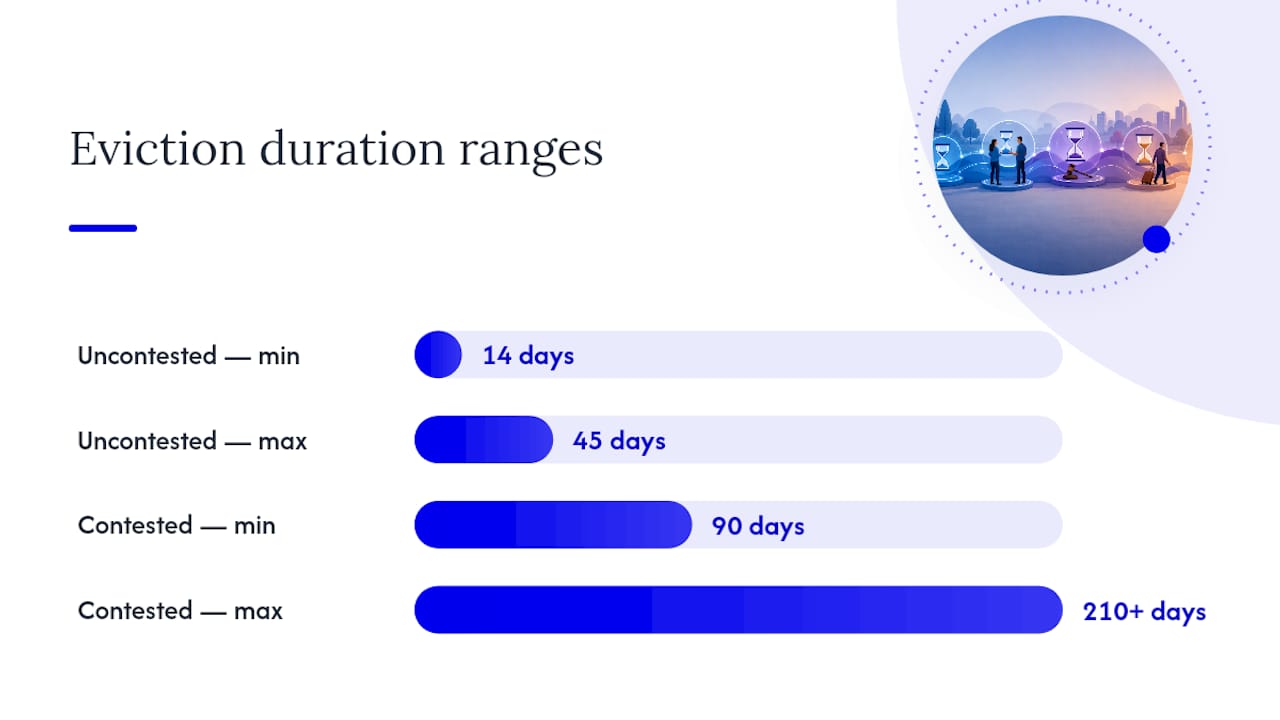
| Timelines vary widely | Uncontested cases often finish in 14 to 45 days; contested cases can run 90 to 210+ days. |
| Self-help is illegal everywhere | Lockouts, utility shutoffs, or removing belongings without a court order can void a landlord's case. |
| Professional support reduces risk | Milwaukeepm coordinates notice preparation, filing, and legal partners to keep the process on track. |
Table of Contents
- Eviction Process Steps at a Glance
- Step 1: Serve the Right Eviction Notice
- Step 2: File the Eviction Complaint With the Court
- Step 3: Serve the Tenant With Court Papers
- Step 4: Tenant Response, Defenses, and Options
- Step 5: The Hearing, Default Judgment, and Outcomes
- Step 6: Writ of Possession and Sheriff Enforcement
- How State Law Changes the Eviction Timeline
- Procedural Mistakes That Get Eviction Cases Dismissed
- Where to Find Forms, Legal Aid, and Rental Assistance
- Eviction Rules Since the COVID-19 Moratoriums
- Mediation and Other Options Before Going to Court
- Tenant Rights During the Eviction Process
- What to Do When You Receive an Eviction Notice
- How Landlords Should Document Evidence
- Handling Payment Disputes and Partial Payments
- A Property Manager's View on Handling Evictions
- Let Milwaukeepm Handle the Eviction Process for You
- Sources
Eviction Process Steps at a Glance
- Give notice. The landlord delivers a written notice matching the violation; the tenant's clock starts the day it's properly served.
- File the case. The landlord submits a complaint and summons at the county courthouse; the court assigns a case number.
- Serve the papers. A process server, sheriff, or authorized adult delivers the court documents to the tenant.
- Respond or default. The tenant files an answer within the deadline, or the court can enter default judgment against them.
- Attend the hearing. A judge hears both sides, or rules automatically if the tenant never showed up.
- Get the judgment. The court issues a ruling and, if the landlord wins, a writ of possession.
- Enforce the writ. The sheriff schedules and carries out the physical move-out.
Before doing anything, check your state's specific notice length and required forms. A three-day notice in one state might need to be a fourteen-day notice next door.
Step 1: Serve the Right Eviction Notice
The notice you choose depends entirely on why you're evicting. A pay or quit notice applies to unpaid rent and gives the tenant a defined window to pay in full or move out. A cure or quit notice covers lease violations, like an unauthorized pet, that the tenant can fix. An unconditional quit notice demands the tenant leave with no chance to fix the problem, typically reserved for severe violations or repeat offenses.
Courts expect specific contents on every notice:
- Full names of tenant and landlord
- The property's exact address
- The required action (pay, cure, or vacate) and the amount or violation at issue
- A clear deadline and the date the notice was delivered
- Landlord's signature and any statutory language your state or city requires
You can deliver notice through personal service, substitute service to another adult at the residence followed by mail, or posting and mailing where the law allows it. California Courts confirms that notice periods run anywhere from 3 days to 60 or 90 days depending on the ground and jurisdiction, so a mismatched notice type is one of the fastest ways to lose a case before it starts.
Pro Tip: Keep a dated copy of every notice you send, along with proof of service, whether that's a signed receipt, a certified mail card, or a photo log showing when and where you posted it.
Step 2: File the Eviction Complaint With the Court
Once the notice period expires without resolution, the landlord files a complaint (often called an unlawful detainer) along with a summons, a copy of the served notice, and supporting documents like a rent ledger.
- File in the court for the county where the rental property sits, not where the landlord lives
- Bring the original notice, proof of service, and any lease or payment records
- Expect a filing fee, which varies by county; check your local clerk's fee schedule before you go
- Use the court's official self-help forms whenever they're available
Colorado Judicial Branch publishes an annotated JDF form series specifically for this step, and similar self-help packets exist in most states. Pulling the wrong form or an outdated version is a common reason clerks reject filings outright.
Step 3: Serve the Tenant With Court Papers
After filing, the tenant must be formally served with the summons and complaint, a separate step from the original notice. Standard methods include personal service by a process server or sheriff, substitute service to another adult at the home combined with a mailed copy, or posting and mailing where permitted.
- Personal service: handed directly to the tenant
- Substitute service: given to an adult resident, then mailed
- Post and mail: used only when other methods fail and local rules allow it
Whoever completes service must sign an affidavit or certificate of service describing exactly how and when it happened, since that document becomes part of the official case file. Service has to occur within the window tied to your court's return date, and if an attempt fails, most states let you try again or switch methods.
Without a valid, properly documented proof of service, a judge can dismiss the case outright or push the hearing back, forcing the landlord to start service over.
Step 4: Tenant Response, Defenses, and Options
Tenants typically get somewhere between 5 and 14 days to file a formal answer, though the exact window depends on the state. Miss that deadline, and the court can enter a default judgment without ever hearing the tenant's side.
Tenants commonly raise defenses like improper notice or service, a dispute over the amount owed, uninhabitable conditions, retaliation, discrimination, or a procedural error in the filing itself. A tenant facing a valid claim has real options: pay the amount owed, fix the lease violation, negotiate a payment plan directly with the landlord, or contact a legal aid office for representation. Landlords, meanwhile, should be gathering ledgers, notices, and written communications the moment the case starts.
Pro Tip: Both sides benefit from building a paper trail early, payment receipts, repair requests, texts, and photos, since a hearing often comes down to whoever has the clearer documentation.
Step 5: The Hearing, Default Judgment, and Outcomes
If the tenant never answers, the court can enter a default judgment for the landlord without a trial. If the tenant does respond, both sides appear for a contested hearing, where the judge weighs evidence and testimony before ruling.
Landlords should walk in with the lease, the served notice, proof of service, a rent ledger, and any relevant photos or messages. Tenants should bring repair requests, payment receipts, and witness statements backing their defense.
- Landlord wins: possession granted, sometimes with a money judgment for unpaid rent
- Tenant wins: case dismissed, tenant stays
- Settlement: both sides agree to terms, often a payment plan or move-out date
- Continuance: hearing gets rescheduled
Uncontested cases resolve dramatically faster than contested ones. Eviction Risk Map puts typical uncontested timelines at roughly 14 to 45 days after filing, while contested cases can stretch to 90 days or well beyond in some states.
Step 6: Writ of Possession and Sheriff Enforcement
Winning a judgment doesn't mean the tenant is out the door that day. The landlord next requests a writ of possession (sometimes called a writ of restitution) from the court, and the sheriff's office schedules and executes the actual lockout.
- Request the writ from the clerk after judgment is entered
- The sheriff sets a lockout date, not the landlord
- Notice-to-vacate windows after the writ ranges from as little as 24 hours to as long as 14 days depending on the state
Landlords should never take matters into their own hands. UNC School of Government is blunt about it: self-help evictions, changing locks, cutting utilities, or removing belongings without a court order, are illegal nationwide and can lead to penalties or outright dismissal of the case.
Pro Tip: Call the sheriff's office to confirm the actual execution date before you schedule cleaning crews, locksmiths, or new tenants.
How State Law Changes the Eviction Timeline
Timelines swing widely depending on where the property sits. Uncontested cases generally wrap up in 14 to 45 days after filing, while contested cases can run 90 to 210+ days in some states, and that's before you add the notice period on top, per Eviction Risk Map.
Expect to budget for a filing fee, a service fee, and a sheriff fee for the final lockout, all of which vary by county. Before you file anything, run through this checklist:
- Confirm the correct notice type and length for your grounds
- Identify the correct court for filing
- Check for mandatory mediation or local tenant-protection ordinances
- Note any additional local notice requirements
State court self-help centers and state law libraries remain the most reliable place to confirm these details before you act.
Procedural Mistakes That Get Eviction Cases Dismissed
Most dismissed eviction cases fail for avoidable reasons, not because the underlying claim was weak. Landlords commonly stumble by using the wrong notice type, leaving out required content, botching service or the proof of service, filing outdated forms, or skipping a mandatory local step like pre-filing mediation.
Tenants make their own costly errors: missing the answer deadline, failing to document conditions or payments, or not reaching out to legal aid when they qualified for free representation.
- Use the court's own official forms whenever they're offered
- Double-check your local notice length and required language before serving
- Keep a written service log with dates, methods, and witnesses
According to the American Apartment Owners Association, even small filing or service errors, like a miscounted deadline, can force a landlord to restart the entire process from scratch. Contested cases, complex defenses, or any procedural uncertainty are strong signals it's time to bring in an eviction attorney.
Pro Tip: A restarted case doesn't just cost time, it resets your notice clock too, so a five-minute form review often saves weeks.
Where to Find Forms, Legal Aid, and Rental Assistance
Start with your state court self-help center or state law library for official, court-approved forms and instructions, as Texas State Law Library recommends. County clerk websites list local filing and service requirements directly.
Tenants can find free or low-cost representation through local legal aid offices, and the National Low Income Housing Coalition tracks emergency rental assistance programs by state. Many courts also offer mediation programs before a case ever reaches trial.
Check your county clerk's website today for the exact filing and service instructions your case requires.
Eviction Rules Since the COVID-19 Moratoriums
The nationwide eviction moratoriums tied to the pandemic have expired, and the federal CDC order that once paused evictions for nonpayment no longer applies anywhere in the country. That said, several states and cities built permanent or semi-permanent protections out of what were originally emergency rules.
Some jurisdictions still require landlords to prove they applied for or exhausted available rental assistance before filing for nonpayment, a holdover from pandemic-era programs. Others added just-cause requirements, extended notice periods, or diversion programs that route nonpayment cases toward mediation before a judge ever sees them. California's Tenant Protection Act, for example, permanently requires "just cause" for termination after a tenant has lived in a unit for twelve months, with relocation payment or fee waiver provisions in some cases, according to California Courts.
The safest approach for landlords is to treat every filing as if leftover emergency rules might still apply in their county, since enforcement varies and some local ordinances never sunset. Tenants facing nonpayment eviction should ask the court clerk directly whether a rental assistance diversion program still exists in their jurisdiction. It costs nothing to ask, and in counties where the program is still active, it can pause a case entirely while an application is processed. Checking your state court's self-help page for current pandemic-related updates takes a few minutes and can prevent filing or facing a case under outdated assumptions.
Mediation and Other Options Before Going to Court
Court isn't always the first stop, and in some counties it isn't even optional to skip mediation. A growing number of jurisdictions require landlords and tenants to attempt mediation before a nonpayment case can proceed to a hearing, particularly in counties that built diversion programs during the pandemic and kept them afterward.
Mediation puts a neutral third party in the room to help negotiate a payment plan, a move-out date, or a compromise that avoids a formal judgment on either party's record. For tenants, this matters beyond just avoiding eviction itself: a filed eviction case can show up on future tenant screening reports even if the tenant ultimately wins or the landlord withdraws, according to LegalClarity. Resolving the dispute before filing, or during an early mediation session, can prevent that record from ever forming.
For landlords, mediation often resolves nonpayment faster than litigation does, since it skips the filing fee, the service window, and the court's own scheduling backlog. It also preserves a working relationship with a tenant who may simply be going through a temporary hardship rather than acting in bad faith.
Community mediation centers, court-annexed mediation programs, and some legal aid offices offer this service at low or no cost. Before filing anything, check whether your county courthouse lists mediation as a required or recommended first step. Colorado's court materials, for instance, note mandatory mediation requirements in certain cases, per Colorado Judicial Branch. Skipping a required mediation step can be its own basis for dismissal.
Tenant Rights During the Eviction Process
Tenants keep meaningful rights throughout every stage of an eviction, and understanding them changes how a tenant should respond to each step. The right to receive proper written notice comes first: a notice missing required content, delivered incorrectly, or too short for the stated grounds can be challenged in court.
Tenants also have the right to file a formal answer and raise defenses, including disputes over the amount owed, habitability problems like a broken furnace or persistent leaks, or a claim that the notice was retaliatory. Retaliation protections matter more than many tenants realize: if a landlord files for eviction shortly after a tenant complains to a housing inspector or requests repairs, that timing itself can become a defense, since most states presume retaliation within a specific window after a protected tenant action.
The right to legal counsel varies by state and, unlike criminal court, isn't automatically provided for free in most eviction cases. Some cities have passed "right to counsel" ordinances guaranteeing free legal representation to tenants facing eviction below certain income thresholds, and that list has grown steadily. Where no such ordinance exists, legal aid organizations remain the primary path to free or reduced-cost representation, though availability depends heavily on local funding and caseload.
Tenants also have the right to remain in the unit until a sheriff physically executes a writ of possession. No landlord, regardless of how strong their case looks, can lawfully remove a tenant, their belongings, or their utilities before that point.
What to Do When You Receive an Eviction Notice
The clock starts the moment a notice is properly delivered, so acting quickly matters more than almost anything else in the process.
If you receive a pay or quit notice, calculate the exact deadline first, then decide whether you can pay in full, negotiate a partial payment plan directly with the landlord, or need to contact legal aid immediately if you dispute the amount. Document the date you received the notice and how it was delivered.
If you receive a cure or quit notice, read the specific violation described and fix it within the stated window if possible, then document the fix with photos, receipts, or written confirmation to the landlord that the issue is resolved.
If you receive an unconditional quit notice, there's no opportunity to fix the problem before the deadline. Contact a tenant attorney or legal aid office right away, since these notices are typically reserved for serious violations and often carry the tightest, most consequential deadlines.
In every case, keep a copy of the notice itself, note the exact delivery date, and start collecting evidence, rent receipts, texts, photos of the unit, that supports your position before a case ever reaches court. Waiting until a hearing date to organize documentation puts tenants at a real disadvantage.
How Landlords Should Document Evidence
Cases get won or lost on paper long before anyone steps into a courtroom, so documentation needs to start on day one of the tenancy, not the day a problem appears.
Keep a running rent ledger showing every payment received, its date, and the method, whether that's through a tenant portal, a check, or cash. Save every written communication with the tenant, texts, emails, and printed letters, since these often become the deciding evidence in a contested hearing. Photograph the unit's condition at move-in and again before any lease-violation notice goes out, timestamped where possible.
- Keep copies of every notice served, along with proof of delivery
- Log maintenance requests and your response dates to counter habitability defenses
- Save all payment records, including partial payments and the dates they were accepted
- Store everything digitally with backups, not just in a single paper file
A tenant portal that logs payments and maintenance requests automatically removes a lot of the guesswork here, since every transaction and communication is timestamped and searchable when a case actually goes to court.
Handling Payment Disputes and Partial Payments
Partial payments create more legal confusion than almost any other issue in residential evictions, and how a landlord handles one can determine whether a case survives a hearing.
In many states, accepting a partial payment after serving a pay-or-quit notice can be treated as waiving that notice entirely, forcing the landlord to start over with a new notice for the remaining balance. Before accepting any partial payment during an active notice period, check your state's specific rule, some require a written disclaimer stating the payment doesn't waive the eviction, while others bar acceptance from resetting the clock at all.
Tenants disputing the amount owed should request an itemized ledger in writing and compare it against their own payment records immediately, since discrepancies over late fees, utility charges, or previous partial payments are among the most common reasons cases get contested rather than settled quietly. Landlords should respond to a good-faith dispute with documentation rather than dismissing it outright, since an unresolved billing disagreement often becomes the tenant's strongest defense at a hearing.
When a dispute can't be resolved through the ledger alone, both sides benefit from proposing a written payment plan with specific dates and amounts, ideally before the case escalates to a contested hearing where a judge has less flexibility to broker a middle ground.
A Property Manager's View on Handling Evictions
Professional managers document every notice, confirm service methods against local rules, and hand off to legal partners the moment a case looks contested. That habit isn't caution for its own sake, it's what keeps a routine filing from becoming a stalled, costly one. A managed eviction workflow trades guesswork for a repeatable process, which is exactly what protects an owner's exposure when timelines and rules shift by county.

Let Milwaukeepm Handle the Eviction Process for You
Milwaukeepm is the alternative to handling an eviction alone, in Milwaukee, that means notice preparation, service coordination, and filing support handled by people who do this daily instead of once every few years.
Our team prepares and serves the correct notice for your situation, files the paperwork with the right county court, and coordinates directly with our eviction attorneys and local sheriff's offices to schedule enforcement without missteps that reset your timeline. Owners also get a tenant portal that logs every payment and communication automatically, so if a case does go to a hearing, the documentation is already organized. If you're dealing with a nonpayment situation or lease violation right now, visit our property management services page or reach out through Milwaukeepm for a consultation before you serve that first notice.
Sources
Save these before you take your next step, since forms and deadlines change by state and even by county.
- California Courts Self-Help: Eviction
- Eviction Risk Map: Eviction timeline by state 2026
- Colorado Judicial Branch: Residential evictions
- UNC School of Government: Don't try this at home — self-help evictions
County clerk pages remain the final word on filing fees and local procedure.
This article is general information, not a substitute for advice from a qualified lawyer. Consult a qualified legal professional about your own circumstances before acting on anything here.