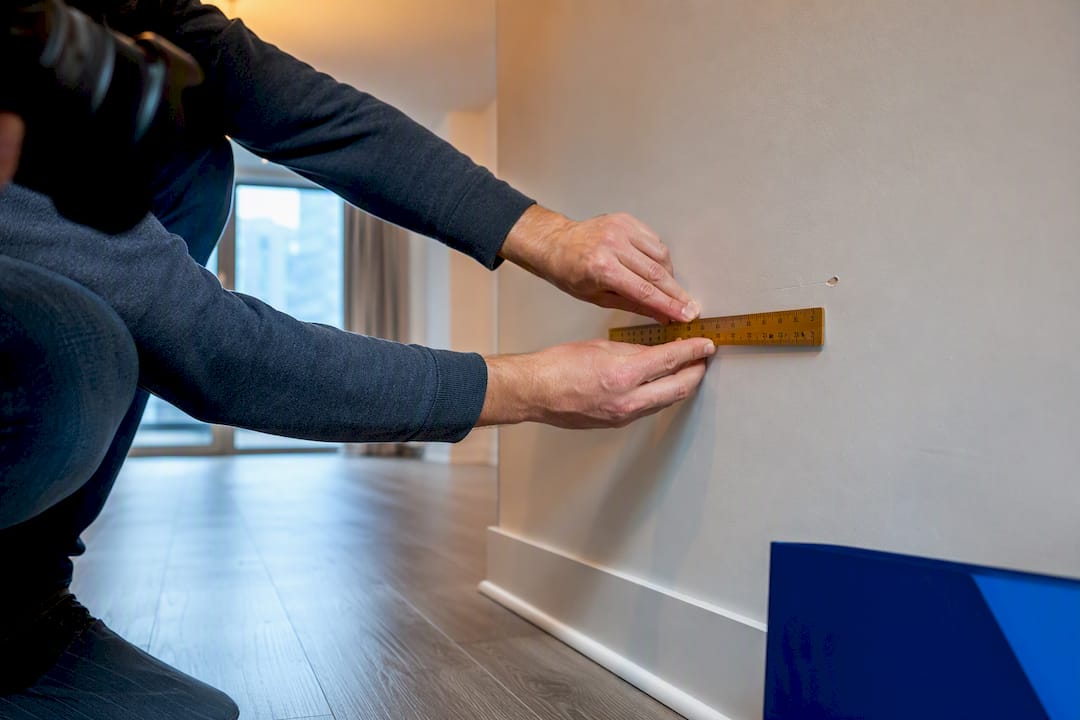
Landlords can lawfully charge for unpaid rent and utilities, damage beyond normal wear and tear, cleaning needed to restore move-in condition, and prorated replacement of worn-out long-lived items. The one rule that governs all of it: every deduction must be itemized with receipts and photos, and the disposition statement must reach the tenant inside your state's deadline. Skip either step and you risk losing your right to keep any of the deposit.
TL;DR:
- Landlords must itemize all deductions with receipts and photos and send the disposition statement within their state's deadline to preserve their right to withhold deposit funds.
- Damage charges must be based on misuse or excessive wear and tear, with depreciation calculations applied to long-lived items like carpet and appliances.
- Proper documentation includes signed move-in reports, timestamped photos, repair receipts, and accurate key inventories, all kept for at least three years.
- Using clear, invoice-matched line items and maintaining a consistent workflow helps prevent disputes and ensures legal defensibility of move-out charges.
- Professional property management services can streamline documentation, inspections, and dispute resolution, reducing legal risks and turn-over times for landlords.
Table of Contents
- What Move-Out Charges Landlords Can Lawfully Assess
- Documentation Checklist Every Landlord Must Assemble
- Calculating Charges: Depreciation, Labor, and Materials
- Deadlines and the Disposition Letter Structure
- Enforcing and Collecting Balances After Move-Out
- Templates and an Operational Workflow You Can Implement Today
- Why Professional Management Reduces Move-Out Disputes
- Get Move-Out Charges Handled Without the Paperwork Chase
- Where to Check State Rules and Statement Templates
- Sources
What Move-Out Charges Landlords Can Lawfully Assess
Every deduction you write down needs a label that would survive a judge's raised eyebrow. Vague line items are the fastest way to lose a dispute, so treat each category as its own mini case file.
- Unpaid rent or utilities: Straightforward if you have the ledger. A tenant who owes $650 in final rent gets billed $650, backed by the lease and payment history.
- Damage beyond normal wear and tear: A cigarette burn in the carpet, a hole punched in drywall, or a broken cabinet hinge from misuse counts. A worn patch of carpet in a high-traffic hallway after three years does not.
- Cleaning to restore move-in condition: If the unit was professionally cleaned before move-in and comes back with grease-caked stovetops or pet odor embedded in the flooring, that cleaning invoice is chargeable. Routine dust or light scuffing is not.
- Prorated replacement of long-lived items: Carpet, paint, and appliances wear down over years regardless of tenant behavior, so you can only bill the remaining useful life, never the full replacement cost.
The dividing line between "normal wear and tear" and "damage" comes down to whether time or misuse caused it. A landlord's inspection checklist should note both the item's age and its condition at move-in, because that comparison is what makes a deduction defensible later.
Documentation Checklist Every Landlord Must Assemble
A move-out file without paperwork is just an opinion. The evidence standard that holds up in a dispute or small claims hearing includes five core pieces:
- Signed move-in inspection report dated and countersigned by the tenant, noting condition item by item.
- Move-in and move-out photos, timestamped and organized by room, showing the same angles both times.
- Contractor invoices or receipts for every repair or cleaning charge, matched in wording to the disposition statement's line items.
- Forwarding address confirmation, since most states require you to send the statement to a valid address within the statutory window.
- Key and fob accounting, confirming what was issued and what came back.
When you write the disposition letter, reference each attachment directly rather than summarizing it. "Carpet cleaning, $180, see attached invoice #4521" holds up far better than "cleaning fee, $180." Keep the full file, photos included, for at least three years, and if you perform repairs yourself, log your hours and materials separately rather than folding them into a flat number.
Pro Tip: Name your photo files by room and date (e.g., "kitchen_moveout_03-14-2026.jpg") so they line up automatically with your inspection report when you're building the disposition packet.
Calculating Charges: Depreciation, Labor, and Materials
Courts expect depreciation calculations on anything with a useful life, not full replacement cost. Prorating based on remaining useful life is the standard landlords are held to for carpet, paint, and major appliances.
Here's a simple worked example: carpet installed at $2,000 with an 8 year expected lifespan, replaced after year 5. Three years of useful life remain out of eight, so the tenant owes 3/8 of $2,000, or $750, not the full replacement cost.
- Always separate labor from materials on the invoice, even when a single contractor did both.
- Attach the actual invoice, not a rounded estimate, whenever the amount exceeds a token cleaning fee.
- Never bundle several charges into one number like "cleaning, paint, carpet: $700." Itemized statements matching invoice wording hold up in disputes; bundled totals routinely get thrown out.
The fix for bundling is simple: break every deduction into its own line, attach its own receipt, and use language that mirrors the invoice exactly.
Deadlines and the Disposition Letter Structure
The clock starts the day the tenant hands back the keys. Most states require a disposition statement within a statutory deadline, and missing that window can forfeit your right to withhold anything, deposit included, while exposing you to statutory penalties on top of it.
Delivery method matters almost as much as timing. Certified mail or tracked delivery is often required or recommended, and electronic delivery generally needs the tenant's prior written consent. Sending both a certified letter and an email, where consent exists, is the safest combination.
A defensible disposition letter contains five parts:
- Total deposit held and any interest owed where state law requires it
- Itemized deductions, each tied to a receipt or invoice number
- Photos or a reference to the attached photo set for each damage claim
- The remaining balance and refund amount, or the additional sum owed
- Delivery date and method, documented for your own records
Enforcing and Collecting Balances After Move-Out
Start with negotiation before you escalate. A short call or email offering a partial reduction in exchange for a signed release often resolves disputes faster and cheaper than court, and any settlement should be in writing before money changes hands.
If the tenant refuses and the balance is worth pursuing, small claims court is the next step. Bring the same file you built for the disposition letter:
- The signed move-in inspection report
- Move-in and move-out photos
- Contractor invoices and receipts
- A copy of the disposition letter and proof of delivery
Weigh the filing fee and your time against the amount owed. Below a few hundred dollars, collections agencies or attorney letters may cost more than they recover. Whichever route you choose, never double-bill by applying the same charge against both the deposit and a separate collection effort.
Templates and an Operational Workflow You Can Implement Today
Consistency is what turns move-out charges from a guessing game into a routine. A repeatable sequence, from move-out notice to disposition letter, cuts disputes because tenants know exactly what to expect at each stage.
- Send a pre-move-out packet outlining cleaning standards, a move-out cleaning checklist, and the inspection schedule.
- Offer an optional pre-move-out walkthrough so tenants can fix minor issues before the final statement is calculated.
- Photograph every room at the final walkthrough using the same angles as the move-in photos, tagged by date and room.
- Assemble the disposition packet, including invoices matching each line item, and send it within your state's deadline.
Pro Tip: A joint pre-move-out inspection, even an informal one, gives tenants a chance to cure issues themselves, which tends to shrink your disputed-charges list before you ever write the disposition letter.
Why Professional Management Reduces Move-Out Disputes
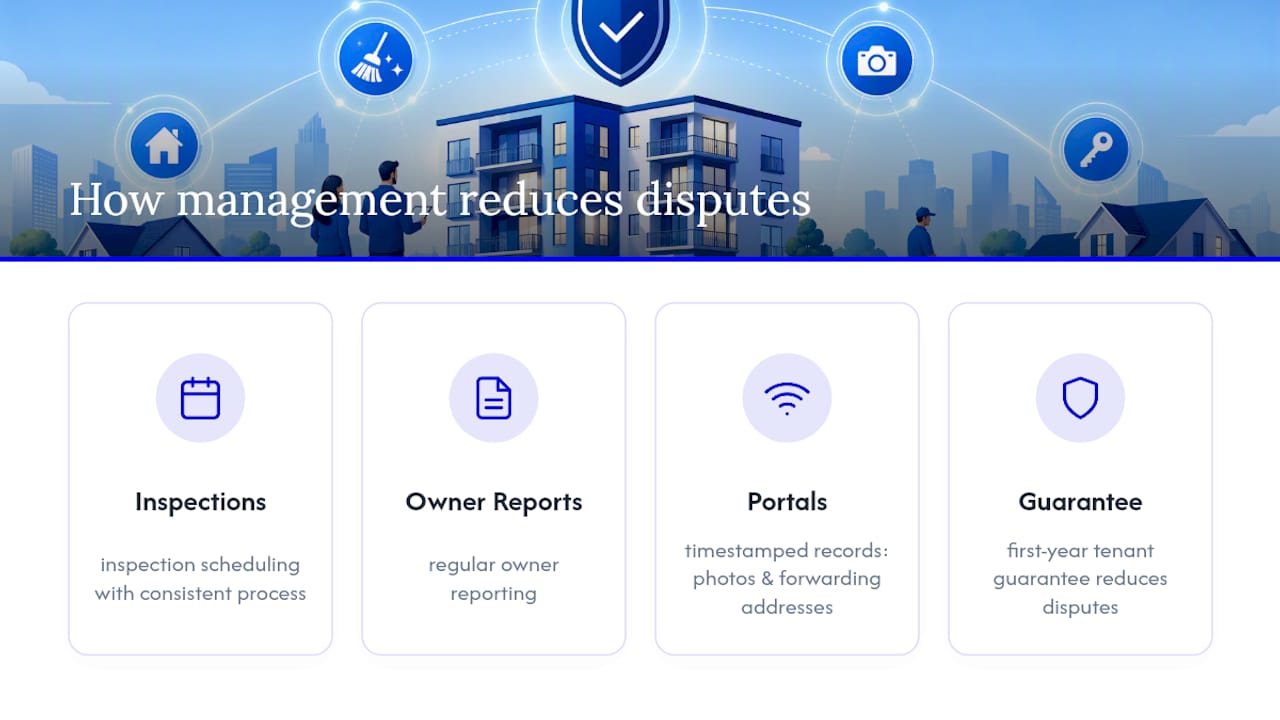
Most disputes trace back to a documentation gap, not a disagreement over the charge itself. Milwaukeepm specializes in comprehensive property management built around exactly the kind of consistent process that closes that gap, from inspection scheduling to owner reporting.
Owner and tenant portals matter here because they create a timestamped record automatically, capturing photo uploads and forwarding addresses without relying on someone's memory weeks later. Combined with a first-year tenant guarantee, that structure gives owners a documented, repeatable system instead of a scramble every time a lease ends.
— Chaim
Get Move-Out Charges Handled Without the Paperwork Chase
Property management services can handle inspections, photo documentation, contractor coordination, and the itemized statement as part of the management process, as an alternative to managing move-out accounting yourself. That means fewer disputes reaching small claims and faster turnover between tenants.
The workflow covers the parts that create the most legal exposure: the move-in baseline report, before-and-after photos, invoice matching, and dispute support if a tenant pushes back. Owners get a documented, defensible record instead of a folder of loose receipts, and the tenant portal keeps forwarding addresses and communication on file automatically. If unpaid rent is part of the picture, the eviction process runs through the same coordinated system. Visit Milwaukeepm's property management services to see how a managed move-out process could work for your property, and request a quote to get started.
Where to Check State Rules and Statement Templates

For state-specific deadlines, consult a deposit law overview, a legal process guide, and a move-out statement template before finalizing your next disposition letter.
Sources
- Move-Out and Security Deposit Records: The 2026 Landlord Playbook · DiscoveryMark
- Itemized Security Deposit Deductions: A Bulletproof Statement | Landager
- The Tenant Move-Out Process & Legal Requirements for Landlords | Justia
- Free Move Out Statement Final Account Statement Financial Template | RocketRent