
A rent roll is a row-by-row report showing every unit, tenant, rent amount, lease term, and payment status for a property, and it functions as the single source of truth for current cash flow. Owners use it to track income, buyers and lenders use it to underwrite deals, and appraisers use it to test a property's numbers against reality. The rule that matters most: reconcile every line to the actual lease and date-stamp the document before you send it anywhere.
TL;DR:
- Rent rolls must include detailed fields such as lease terms, rent basis, and recoveries, especially for commercial properties, to prevent disputes during transactions.
- They are primarily used continuously by owners and managers for operations and during sales, refinancing, and appraisals by verifying income and lease accuracy.
- Building an accurate rent roll requires collecting original lease documents, abstracting data, reconciling monthly, and updating immediately after any lease change.
- Investors scrutinize rent rolls for indicators of income stability like vacancy rates, lease terms, tenant concentration, and market-rate rent comparisons.
- Certified, date-stamped rent rolls backed by tenant estoppel certificates and careful verification are essential for legal safety and credibility in transactions.
Table of Contents
- What Should a Rent Roll Include? Fields for Residential vs. Commercial
- Who Actually Uses a Rent Roll and When?
- How Do You Build and Maintain an Accurate Rent Roll?
- What Do Investors Actually Look for in a Rent Roll?
- What Mistakes Undermine a Rent Roll, and How Do You Verify One?
- Sample Rent Roll Layout for a Small Property
- What Legal and Compliance Issues Touch a Rent Roll?
- An Investor's Checklist for Keeping a Rent Roll Honest
- How a Full-Service Property Manager Keeps Your Rent Roll Accurate
- Sources
What Should a Rent Roll Include? Fields for Residential vs. Commercial
A rent roll works only if its columns capture the details someone will actually check. Skimping on fields is how disputes start during a sale or refinance.
For residential properties, the standard fields cover the basics of who's paying what and when their lease ends. A rent roll typically lists unit number, tenant name, bedroom count, square footage, monthly rent, lease start and end dates, security deposit amount, current payment status, and any past-due balance.
Commercial rent rolls carry more moving parts because commercial leases themselves are more complex. Base rent is usually quoted per square foot rather than as a flat monthly number, and commercial rent rolls commonly add columns for rentable square footage, lease type (gross, modified gross, or triple net), scheduled rent escalations, expense recoveries, and renewal or termination options.
Here's how the two compare side by side:
| Field category | Residential rent roll | Commercial rent roll |
|---|---|---|
| Rent basis | Flat monthly rent | Rent per square foot |
| Lease structure | Standard 12-month lease | Gross, modified gross, or NNN |
| Escalations | Rare | Common, scheduled increases |
| Recoveries | Not applicable | CAM, taxes, insurance |
| Renewal terms | Simple renewal option | Multi-year options, right of first refusal |
A few fields get overlooked until they cause a problem later:
- Ancillary income: parking fees, storage rentals, pet fees, and laundry income belong in their own column, not buried inside base rent.
- Percentage rent: retail leases tied to a tenant's sales volume need a separate line showing the breakpoint and reporting period.
- Concessions: free rent months or reduced rent during a lease-up phase should be flagged, since they distort the "current rent" figure if left unmarked.
- CAM reconciliations: commercial rolls should note whether recoveries are billed monthly, quarterly, or trued up annually.
Add columns only when they change how someone reads the number. A four-unit duplex doesn't need a recoveries column; a shopping center without one is missing the story behind its income.
Who Actually Uses a Rent Roll and When?
The rent roll gets pulled out for different reasons depending on who's asking, and knowing the audience changes what you emphasize.
Owners and property managers check it constantly, often weekly, to catch late payments and flag upcoming lease expirations before they become vacancies. That routine use is different from what happens during a transaction.
Buyers and lenders request a dated, reconciled rent roll during due diligence on a sale or refinance, and JPMorganChase notes it's one of the first documents a lender's underwriting team will ask to see. Appraisers cross-check the rent roll against the property's profit and loss statement to calculate cap rate and gross rent multiplier, since a mismatch between reported income and actual leases is a red flag they're trained to catch.
Who typically pulls a rent roll, and why:
- Owners: monitor cash flow, track late rent, plan for lease renewals.
- Property managers: use it operationally to prioritize collections and maintenance scheduling.
- Buyers: verify the income a seller is claiming before closing.
- Lenders: underwrite the loan based on verified, not projected, income.
- Appraisers: reconcile stated income against market rents and the property's financials.
One practical note on sharing a rent roll outside your team: redact tenant Social Security numbers, bank account details, and any personal contact information before sending it to a buyer or lender. The document needs to prove income, not expose tenant identities.
How Do You Build and Maintain an Accurate Rent Roll?
A rent roll is only as good as the documents behind it. Building one that survives scrutiny takes a specific sequence, not a quick spreadsheet guess.
- Gather source documents. Pull every active lease, amendment, payment ledger, and the property's profit and loss statement before you touch a spreadsheet.
- Abstract each lease into one row. Lease abstraction means pulling the tenant name, rent amount, lease dates, deposit, and any special terms out of the lease document itself, not from memory or an old rent roll.
- Consolidate into a standardized format. Use a spreadsheet template or let your property management software generate it automatically, then date-stamp the document the day you finalize it.
- Reconcile monthly. Match every row against actual bank deposits or payment records, not just what the lease says should have come in.
- Update immediately after any lease change. A renewal, rent increase, or new tenant should hit the rent roll the same week it happens, not at the next quarterly review.
- Prepare a certified-as-of version for transactions. When selling or refinancing, generate a rent roll stamped with a specific date and back it with tenant estoppel certificates confirming the lease terms match what the tenant will attest to.
Pro Tip: Set a recurring calendar reminder for the first business day of each month to reconcile the rent roll against your bank statement. Rent rolls go stale fastest in the gap between when a tenant's status changes and when someone remembers to update the file.
Spreadsheets work fine for a handful of units, but they break down once you're managing multiple properties with different lease structures. Property management software that auto-generates the rent roll from payment records removes a step where human error tends to creep in, though it still needs a documented reconciliation process behind it.
What Do Investors Actually Look for in a Rent Roll?
The numbers on a rent roll only matter if you know what to do with them. Investors pull specific figures to answer one question: is this income real and sustainable?
Start with gross rental income. Add up every unit's current rent to get a monthly total, multiply by 12 for the annualized figure, and that number becomes the starting point for calculating net operating income and, from there, the cap rate.
Beyond the top-line number, a handful of metrics tell you whether the income is stable or fragile:
- Vacancy rate: the share of units not currently generating rent, which directly reduces the gross income figure.
- Weighted average lease term (WALT): how much time is left, on average, across all leases weighted by their rent contribution. A longer WALT signals more predictable income.
- Tenant concentration: if one or two tenants account for a large share of total rent, losing either one creates outsized risk.
- Rent per square foot: compare each unit's rate against similar properties in the market to spot units priced well below or above market.
A cluster of leases expiring within the same six-month window can look risky at first glance, but it's often an opportunity: it lets an owner reset several units to market rent at once rather than staggering small increases over years.
Watch for these warning signs when reviewing someone else's rent roll: escalation clauses that haven't been applied in years, a large share of units renting well below market with no explanation, and past-due balances that keep growing month over month without a corresponding note about collection efforts.
What Mistakes Undermine a Rent Roll, and How Do You Verify One?
Most rent roll problems come from the same handful of habits, and they're avoidable once you know to look for them.
The most common error is failing to apply lease amendments. A tenant renews at a new rate, but the rent roll still shows the old figure because nobody updated the row. Missed escalations follow close behind. Commercial leases with scheduled annual increases need someone actively tracking the calendar, and it's easy to let a 3% bump slide for a year or two unnoticed. Unrecorded concessions are the third repeat offender: a tenant getting one free month doesn't show up as a discount on most rent rolls, which inflates the effective rent figure.
Verification catches these before they cause a problem at closing:
- Abstract every lease independently rather than trusting the existing rent roll.
- Match each row against the specific clause in the lease that supports it, not just the total.
- Confirm security deposit amounts and payment history against bank records.
- Request tenant estoppel certificates, which have the tenant confirm in writing that the lease terms on the rent roll match what they signed.
Pro Tip: Keep a version history for every rent roll you produce, with the date and source document linked to each change. If a lender or buyer questions a figure six months later, you want to show exactly when and why it changed.
Lenders relying on a rent roll for underwriting typically require it to be dated within 30 to 60 days of the loan application and often ask for supporting estoppel certificates on the largest leases in the building.
Sample Rent Roll Layout for a Small Property
Here's a compact example for a four-unit residential building, showing how the rows roll up into totals.
Monthly total: $3,650. Annualized income: $43,800, before accounting for the vacant unit's lost income or any ancillary charges like parking or laundry. Add columns for those extras as your portfolio grows, and keep the layout consistent across properties so you can compare rolls side by side without reformatting each time.
What Legal and Compliance Issues Touch a Rent Roll?
A rent roll isn't just an operational spreadsheet. It carries legal weight the moment it's used in a transaction or a tax filing.
When a rent roll is submitted as part of loan underwriting or a purchase agreement, misstating rent figures or occupancy status can expose the seller to fraud claims if a buyer or lender relied on inaccurate numbers to make a decision. This is exactly why certified, date-stamped rolls backed by estoppel certificates matter: they shift verification onto the tenant's own signed confirmation, not just the seller's word.
Fair housing rules also touch rent roll data indirectly. If a rent roll shows patterns like consistently different lease terms or deposit amounts across tenants without a clear, documented business reason, that inconsistency can draw scrutiny during a fair housing complaint or audit.
On the tax side, the income shown on a rent roll should tie directly to what's reported on Schedule E for federal tax purposes. A gap between what the rent roll shows as collected and what's reported on a tax return is one of the first things an IRS audit or a lender's quality control review will flag. Keeping rent-roll-backed records that match your bank deposits and tax filings protects you in both scenarios.
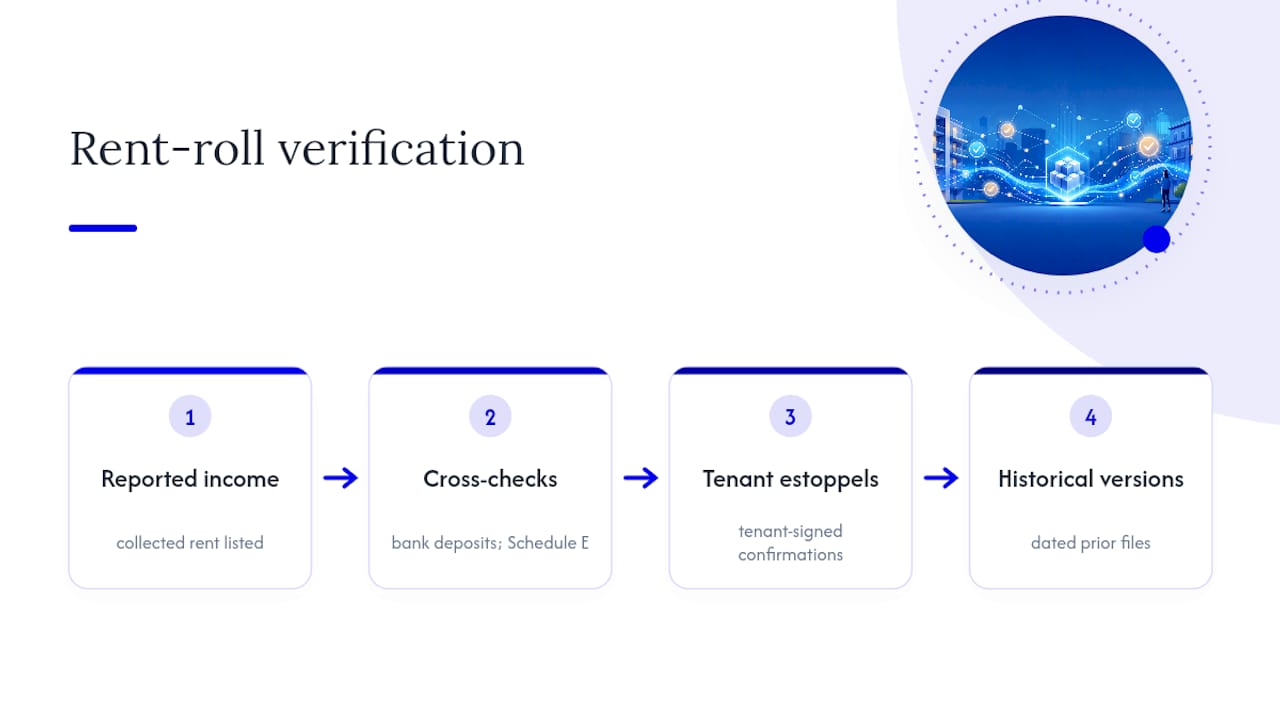
Retain old versions of your rent roll rather than overwriting them. If a dispute arises over what a tenant owed on a specific date, a dated historical version is far more useful than a single current file with no record of what changed and when.
An Investor's Checklist for Keeping a Rent Roll Honest
If you take one thing from this guide, make it a habit: collect every lease, abstract it into your rent roll, reconcile against bank deposits monthly, date-stamp the file, and flag concessions the moment they're granted. Miss any one of those steps and the rent roll stops being trustworthy, no matter how clean it looks.
Owners who track expirations closely tend to catch renewal opportunities before a tenant even raises the subject. That's where a good tenant screening process and consistent owner portal reporting pay for themselves, since accurate data depends on accurate inputs from day one.
— Chaim
How a Full-Service Property Manager Keeps Your Rent Roll Accurate
Milwaukeepm treats rent roll accuracy as a byproduct of doing the operational work right the first time, not a separate task bolted on before a sale. Every lease gets abstracted into the owner's records at signing, rent collection runs through a documented system rather than a mix of checks and cash, and the owner portal reflects payment status in real time instead of a spreadsheet someone updates once a month.
Self-managing a rent roll works fine for an owner with one or two properties and the time to reconcile records every month without fail. It stops working the moment you add a third property, a commercial lease with escalations, or a tenant dispute that needs a paper trail. That's typically the point where bringing in a manager pays for itself in fewer errors and faster turnaround during a sale or refinance.
Milwaukeepm's tenant guarantee also means the tenants behind your rent roll numbers have been screened to reduce the risk of the past-due balances and vacancy gaps that make a rent roll look shaky to a lender. If your portfolio has outgrown a spreadsheet, explore Milwaukeepm's property management services and get a rent roll you can hand to a buyer or lender without a second look.
Sources
- What Is a Rent Roll? | JPMorganChase
- Rent roll: what it is, what it includes, and an example
- Rent Roll | Buildium
- What is a Rent Roll (Plus a Free Rent Roll Template) | Stessa
- About Schedule E (Form 1040) — IRS